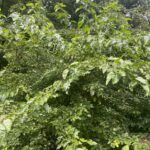
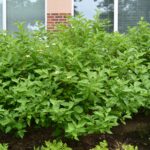
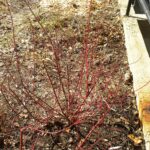
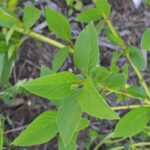
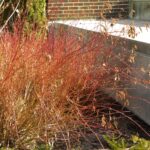
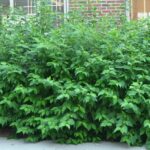
Shrub Cornus alba [Tatarian Dogwood] Grows well in a variety of situations, including wet soil. Easy to transplant. Relatively trouble-free. A three-year pruning cycle improves form, vigor, and winter stem color effect. Cutting all stems 6-12" from ground in late winter has similar effect. Best in mass plantings. Excellent for winter color. Leaf blight can be a problem.
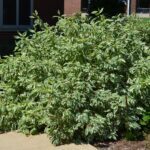
Shrub Cornus alba 'Argenteo-Marginata' [Variegated Red Twig Tatarian Dogwood] A vigorous cultivar with attractive, variegated leaves. Grows well in a variety of situations, including wet soil. Easy to transplant. Relatively trouble-free. A three-year pruning cycle improves form, vigor, and winter stem color effect. Cutting all stems 6-12" from ground in late winter has similar effect. Best in mass plantings. Excellent for winter color. Leaf blight can be a problem.
Shrub Cornus alba 'Bailhalo' [sold as Ivory Halo™] [Variegated Red Twig Dogwood] A compact cultivar with attractive, variegated leaves. Grows well in a variety of situations, including wet soil. Easy to transplant. Relatively trouble-free. A three-year pruning cycle improves form, vigor, and winter stem color effect. Cutting all stems 6-12" from ground in late winter has similar effect. Best in mass plantings. Excellent for winter color. Leaf blight can be a problem.
Shrub Cornus alba 'Bud’s Yellow' [Yellow Twig Tatarian Dogwood] This cultivar has yellow stems that are especially prominent in the winter. It has better resistance to canker than the similar Cornus sericea 'Flaviramea'. Grows well in a variety of situations, including wet soil. Easy to transplant. Relatively trouble-free. A three-year pruning cycle improves form, vigor, and winter stem color effect. Cutting all stems 6-12" from ground in late winter has similar effect. Best in mass plantings.
Shrub Cornus alba 'Jefreb' [sold as Little Rebel®] [Little Rebel Tatarian Dogwood] Little Rebel® has a compact form with incredible maroon fall color and bright red stems in the winter. It also stands out in the summer with bark that is smooth and stems that have a tinge of red to them.
Shrub Cornus alba 'Kesselringii' [Kesselring Tatarian Dogwood] This cultivar is known for its deep purple twigs in winter and rich reddish-purple foliage in fall. Grows well in a variety of situations, including wet soil. Easy to transplant. A three-year pruning cycle improves form, vigor, and winter stem color effect. Cutting all stems 6-12" from ground in late winter has similar effect. Best in mass plantings. Excellent for winter color. Canker can be a problem.
Shrub Cornus alba 'Regnzam' [sold as Red Gnome™] [Dwarf Red Twig Tatarian Dogwood] 'Regnzam' is a compact cultivar, also known for its bright red stems and fall foliage. Grows well in a variety of situations, including wet soil. Easy to transplant. Relatively trouble-free. A three-year pruning cycle improves form, vigor, and winter stem color effect. Cutting all stems 6-12" from ground in late winter has similar effect. Best in mass plantings. Excellent for winter color. Leaf blight can be a problem.
Tree InvasiveThis plant is considered invasive Morus alba [White Mulberry] It will grow in nearly any situation. There are occasional problems with cankers, mites, and bacterial blights. Morus alba is very similar to the native red mulberry (Morus rubra), but may be distinguished by the leaves. Its leaves have glossy surfaces whereas the leaves of Morus rubra do not. Morus alba is found throughout the United States, where it invades old fields, urban lots, roadsides, forest edges, and other disturbed areas. It poses an ecological…
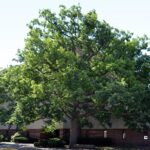
Tree Indiana Native Quercus alba [White Oak] One of the most majestic trees at maturity with a picturesque framework, but requires many years to reach maturity. Long-lived, the kind of tree to use where it can be appreciated by succeeding generations. Slow growth eliminates it as a tree for quick effect. Roots are highly sensitive to disturbance, even foot traffic. Almost impossible to transplant from the wild. Often difficult to find in nurseries due to slow growth and recalcitrance to propagation by…