Shrub/Tree Purdue Plant Doctor Available Prunus sp. [Cherry] Prunus is a large and important genus of over 400 species of mostly deciduous trees and shrubs, in addition to countless hybrids. Important members of this genus include cherries, almond, peaches, plums, and apricots. Prunus can be subject to many pests and diseases. Purdue Plant Doctor Available
Shrub Purdue Plant Doctor Available Prunus tomentosa [Nanking Cherry] Among earliest of Prunus to flower. Subject to the troubles of other cherries (fireblight, etc.), but less so than some. Leaf spot in wet seasons. Often short-lived. Purdue Plant Doctor Available
Shrub/Tree Indiana Native Audio Recording AvailableID That Tree Video AvailablePurdue Plant Doctor Available Prunus virginiana [Common Chokecherry] The Common Chokecherry can be a suckering small tree or large shrub that produces fragrant white racemes followed by small, purple-black cherries. These fruits can be used for pies, jellies, and jams (do not eat fresh). Suckers must be immediately removed to control growth. Indiana NativeAudio Recording AvailableID That Tree Video AvailablePurdue Plant Doctor Available
Tree Purdue Plant Doctor Available Prunus virginiana 'Canada Red' [Canada Red Chokecherry] Feature throughout the season due to its striking colored fruit and foliage. Purdue Plant Doctor Available
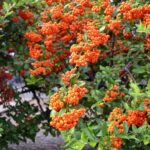
Shrub Audio Recording AvailablePurdue Plant Doctor Available Pyracantha coccinea [Scarlet Firethorn] A favorite for espalier training, because of the adaptable branching habit and showy orange-red fruits. Tends to be semi-evergreen in cooler climates and evergreen in warmer climates. Adapted to a variety of soils and environments. Fireblight can be serious. Other problems are scab and leaf and twig blight. Audio Recording AvailablePurdue Plant Doctor Available
Shrub Audio Recording AvailablePurdue Plant Doctor Available Pyracantha coccinea 'Kasan' [Compact Scarlet Firethorn] A favorite for espalier training, because of the adaptable branching habit and showy orange-red fruits. Tends to be semi-evergreen in cooler climates and evergreen in warmer climates. Adapted to a variety of soils and environments. 'Kasan' is a hardier (USDA zone 5), compact cultivar with spreading branches and excellent fruit set. Scab can be serious in this cultivar. Other possible problems include fireblight and leaf and twig blight. Audio Recording AvailablePurdue Plant Doctor Available
Shrub Audio Recording AvailablePurdue Plant Doctor Available Pyracantha coccinea 'Lalandei' [Lalandei Scarlet Firethorn] A favorite for espalier training, because of the adaptable branching habit, showy fruits, and vigourous growth. Adapted to a variety of soils and environments but is susceptible to scab. 'Lalandei' is the most popular Scarlet Firethorn cultivar in northern areas, although it may winter burn. Audio Recording AvailablePurdue Plant Doctor Available
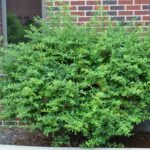
Shrub Purdue Plant Doctor Available Pyracantha × 'Gnozam' [sold as Gnome®] [Dwarf Firethorn] 'Gnozam' is a dense, compact shrub that bears numerous attractive orange berries in the fall and through the winter, but is severely susceptible to scab. Firethorns are a favorite for espalier training, because of the adaptable branching habit and showy fruits. Tends to be semi-evergreen in cooler climates and evergreen in warmer climates. Adapted to a variety of soils and environments. Fireblight can be serious. Other problems are scab and leaf and twig blight. Purdue Plant Doctor Available
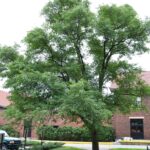
Tree InvasiveThis plant is considered invasive Audio Recording AvailableID That Tree Video AvailablePurdue Plant Doctor Available Pyrus calleryana [Callery Pear] Overused, weak wooded, short-lived. Flowers are malodorous and often killed by late spring freezes. Some fireblight susceptibility. Forms narrow crotch angles that can result in a larger tree literally splitting in two. Very small fruits are a litter problem when abundant. Considered invasive in many areas. Audio Recording AvailableID That Tree Video AvailablePurdue Plant Doctor Available
Tree InvasiveThis plant is considered invasive Audio Recording AvailableID That Tree Video AvailablePurdue Plant Doctor Available Pyrus calleryana 'Aristocrat' [sold as Aristocrat®] [Aristocrat Callery Pear] Aristocrat is one of the better performing Callery Pear variants. Flowers are malodorous, but the later blooming Aristocrat flowers are not as often killed by late spring freezes as are the flowers of other P. calleryana variants. Some fireblight susceptibility, especially in the south. The branching of Aristocrat is more horizontal and does not form as narrow crotch angles as many other Callery Pears. Very small fruits are a litter problem when abundant. Considered invasive… Audio Recording AvailableID That Tree Video AvailablePurdue Plant Doctor Available