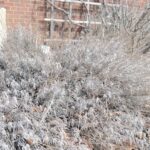
Shrub Juniperus horizontalis 'Youngstown' [Youngstown Andorra Juniper] Youngstown Andorra Juniper is a cultivar of the creeping Juniper. It has a mounding form and dense branches that give the evergreen its uniform shape. Youngstown offers season round interest with its silver-green foliage that turns bronze in the winter.
Shrub Juniperus squamata 'Meyeri' [Meyer Singleseed Juniper] 'Meyeri' is a dense, bushy female cultivar that has striking steel-blue foliage. Unfortunately, this cultivar retains dead needles on its branches and can become unattractive with age. This plant gained its "Singleseed Juniper" common name from the individual seed borne by each cone. Widely adapted to soils and climates. Does well in alkaline soils, but not wet soils. Susceptible to bagworms.
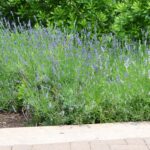
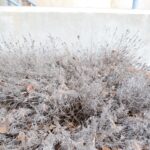
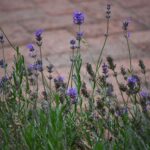
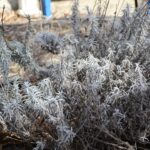
Shrub Lavandula angustifolia [Common Lavender] Beautiful, fragrant purple flowers and foliage. Great plant for fine texture in the front landscape borders. Pruning to the ground every 3 to 4 years keeps the foliage full to the ground and produces uniform, fresh new growth.
Shrub Lavandula angustifolia 'Ellagance Snow' [White Common Lavender] 'Ellagance Snow' is a smaller cultivar with beautiful, fragrant white flowers and foliage. Great plant for fine texture in the front landscape borders. Pruning to the ground every 3 to 4 years keeps the foliage full to the ground and produces uniform, fresh new growth.
Shrub Lavandula angustifolia 'Munstead' [Munstead English Lavender] 'Munstead' is a compact plant with beautiful, fragrant lavender-blue flowers and foliage. Great plant for fine texture in the front landscape borders. Pruning to the ground every 3 to 4 years keeps the foliage full to the ground and produces uniform, fresh new growth.
Shrub Lavandula angustifolia 'Rosea' [Pink Common Lavender] 'Rosea' is compact and mounded with beautiful, fragrant pale pink flowers and foliage. Great plant for fine texture in the front landscape borders. Pruning to the ground every 3 to 4 years keeps the foliage full to the ground and produces uniform, fresh new growth.
Shrub Lavandula × intermedia 'Provence' [Provence Lavandin] Lavandula x intermedia is a hybrid of L. angustifolia and L. latifolia. 'Provence' has beautiful, fragrant light purple flowers and foliage. Great plant for fine texture in the front landscape borders. Pruning to the ground every 3 to 4 years keeps the foliage full to the ground and produces uniform, fresh new growth.
Shrub Ligustrum 'Vicaryi' [Golden Privet] Cross between L. ovalifolium 'Aureum' and L. vulgare. Vase-shaped habit and the leaves are golden yellow for the entire growing season.
Shrub Indiana Native Lindera benzoin [Spicebush] The Spicebush is an excellent native shrub for naturalizing or in borders. Tolerant of full shade, although it tends to become leggy in lower light situations. Difficult to transplant; use container-grown plants. Prefers moist soils; not especially drought tolerant. Dioecious.
Shrub InvasiveThis plant is considered invasive Lonicera tatarica [Tatarian Honeysuckle] Widely adapted to different soils and exposures, but avoid wet soils. Pruning of dead twigs is required periodically. Renewal pruning to a low framework every 5-8 years is helpful to maintain nice form and vigor. Russian aphid, which causes witches brooming, is a significant pest. Lonicera tatarica readily invades open woodlands, old fields, and other disturbed sites. It can spread rapidly due to birds and mammals dispersing the seeds and can form an extremely dense…