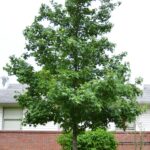
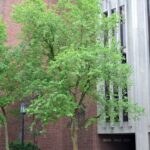
Shrub Ligustrum 'Vicaryi' [Golden Privet] Cross between L. ovalifolium 'Aureum' and L. vulgare. Vase-shaped habit and the leaves are golden yellow for the entire growing season.
Shrub Indiana Native Lindera benzoin [Spicebush] The Spicebush is an excellent native shrub for naturalizing or in borders. Tolerant of full shade, although it tends to become leggy in lower light situations. Difficult to transplant; use container-grown plants. Prefers moist soils; not especially drought tolerant. Dioecious.
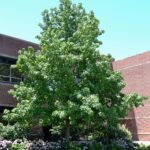
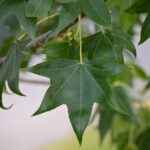
Tree Indiana Native Liquidambar styraciflua [American Sweetgum] Handsome shade tree with few troubles and outstanding seasonal interest. Widely adapted to soils and climates, as evidenced by its wide range. Fall foliage coloration varies greatly in timing and intensity among individuals. Rather difficult to transplant in large sizes. Varies widely in hardiness. Select native northern stock for use in North. Horned fruits can be a serious litter problem, dulling mower blades and injuring bare feet. Also see Liquidambar styraciflua (Shuttle Gum Group).
Tree Liquidambar styraciflua 'Hapdell' [sold as Happidaze™] [Happidaze American Sweetgum] Handsome shade tree with few troubles and outstanding seasonal interest. Widely adapted to soils and climates. 'Hapdell', commonly sold under the name Happidaze, is a fruitless cultivar with a dense crown and deep maroon fall foliage. Rather difficult to transplant in large sizes.
Tree Indiana Native Liquidambar styraciflua (Shuttle Gum Group) [American Sweetgum] This group of Liquidambar styraciflua (Sweetgum) trees was germinated in August of 1984 aboard the space shuttle Discovery. Purdue astronaut Charles Walker of Bedford, Indiana, brought back 200 tiny trees; these recognize Purdue's many astronauts. Sweetgums are handsome shade trees with few troubles and outstanding seasonal interest. Widely adapted to soils and climates, as evidenced by their wide range. Fall foliage coloration varies greatly in timing and intensity among individuals. Rather difficult to transplant in…
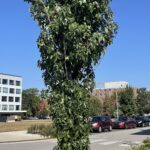
Tree Liquidambar styraciflua 'Slender Silhouette' [Slender Silhouette Sweetgum] As the cultivar name suggests, this tree has a narrow, columnar-conical habit, which is a desirable for those small spaces within the landscape. 'Slender Slihouette' considered a 'fruitless' cultivar, but does produce a small number of multi-horned, round fruits that mature in the fall. Its leaves are a lustrous-dark green, which turns to a mixture of deep purples, reds, and yellows.
Tree Liquidambar styraciflua 'Ward' [sold as Cherokee™] [Cherokee American Sweetgum] This variant of the American Sweetgum is nearly fruitless and hardy to -28 degrees F without injury. Handsome shade tree with few troubles and outstanding seasonal interest. Widely adapted to soils and climates, as evidenced by its wide range. Fall foliage coloration varies greatly in timing and intensity among individuals. Rather difficult to transplant in large sizes.
Tree Indiana Native Liriodendron tulipifera 'Little Volunteer' [Little Volunteer Tulip-tree] 'Little Volunteer' is a dwarf cultivar with smaller 4-lobed and flat-topped green leaves. It makes a wonderful street tree with its smaller size in habit, leaf, and flower. While keeping the classic yellow fall color and yellow-orange-green flower as other varieties.
Tree Indiana Native Maclura pomifera [Osage-orange] Withstands wind and dry conditions well. Used by farmers as a hedgerow for livestock fencing because of its thorniness. Highly deer resistant. Fruits are said to be an insect and rodent repellent. Extremely decay resistant wood, containing 1% by weight 2,3,4,5-tetrahydroxystilbene (a fungitoxic compound). Large fruits create litter problem; select staminate trees to avoid fruit (unless you believe the fruits are of interest). Due to invasive root system, do not plant near sewer or drainage…
Tree Maclura pomifera 'White Shield' [White Shield Osage-Orange] 'White Shield' is a cultivar with some charming characteristics including: dark green glossy heart shaped leaves, a lovely yellow fall color, and is both fruitless and thornless.