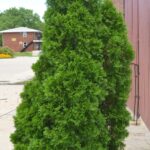
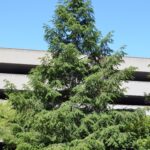
Tree Indiana Native Audio Recording AvailableID That Tree Video AvailablePurdue Plant Doctor Available Tsuga canadensis [Canadian Hemlock] One of the finest plants for evergreen hedges; even the faster growing forms can be kept to 4-8' tall without difficulty. Dwarf forms are excellent rock garden or border specimens. Foliage browns in dry soil, drying wind, and winter sun in very exposed sites. Does not tolerate long periods of drought. Can be scorched by full sun and temperatures above 95 degrees F. Many minor pest problems, with wooly aldelgids being especially serious in the… Indiana NativeAudio Recording AvailableID That Tree Video AvailablePurdue Plant Doctor Available
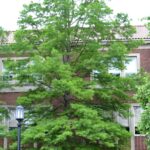
Tree Indiana Native ID That Tree Video AvailablePurdue Plant Doctor Available Ulmus alata [Winged Elm] Indiana NativeID That Tree Video AvailablePurdue Plant Doctor Available
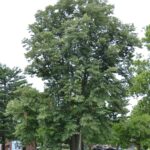
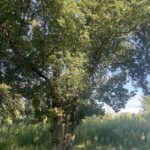
Tree Indiana Native Audio Recording AvailableID That Tree Video AvailablePurdue Plant Doctor Available Ulmus rubra [Slippery Elm] The Slippery Elm has a vase-shaped form, similar to that of the American Elm (Ulmus americana), but with more ascending branchlets. This tree gained its common name from the moist, slippery, red inner bark chewed by Native Americans and pioneers to quench thirst. Not considered very ornamental for the landscape, due to its coarse texture, weedy tendencies, and susceptibility to Dutch Elm Disease (although not as severe as the American Elm). Indiana NativeAudio Recording AvailableID That Tree Video AvailablePurdue Plant Doctor Available
Shrub Indiana Native Audio Recording Available Vaccinium angustifolium [Lowbush Blueberry] The Lowbush Blueberry requires acidic soils with a pH between 4.5 and 5.5. Iron chlorosis can be a problem in higher pH soils. Mulch around roots to maintain high organic matter. For higher blossom and berry output, grow in full sun. Berries are sweet and edible. Indiana NativeAudio Recording Available
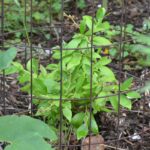
Shrub Indiana Native Audio Recording AvailableID That Tree Video AvailablePurdue Plant Doctor Available Viburnum acerifolium [Mapleleaf Viburnum] The Mapleleafe Viburnum is a shade and drought tolerant plant that is excellent for naturalizing. Tolerant to the poison excreted by Black Walnuts. Indiana NativeAudio Recording AvailableID That Tree Video AvailablePurdue Plant Doctor Available
Shrub Indiana Native Audio Recording AvailablePurdue Plant Doctor Available Viburnum dentatum [Arrowwood Viburnum] Can look ragged in dry soil. Flowers malodorous to some. Attractive to birds. Name derived from Native American use of strong sucker shoots for arrow shafts. The most durable of viburnums. Serves as a nice neutral background shrub. Indiana NativeAudio Recording AvailablePurdue Plant Doctor Available
Shrub/Tree Indiana Native Audio Recording AvailablePurdue Plant Doctor Available Viburnum lentago [Nannyberry Viburnum] The Nannybery can be grown as a large, suckering shrub or small tree and is noted for its white flower cymes and edible berries. The flower buds for the following year are formed in the summer, so if pruning is desired, it should be completed immediately after flowering. Indiana NativeAudio Recording AvailablePurdue Plant Doctor Available
Shrub Indiana Native Purdue Plant Doctor Available Viburnum molle [Kentucky Viburnum] The Kentucky Viburnum is uncommon in commerce, and is closely related to Viburnum dentatum (Arrowwood Viburnum). Interesting and attractive exfoliating bark. Flowers malodorous to some. Attractive to birds. Durable viburnum. Serves as a nice neutral background shrub; also good for naturalizing. Indiana NativePurdue Plant Doctor Available
Shrub/Tree Indiana Native Audio Recording AvailableID That Tree Video AvailablePurdue Plant Doctor Available Viburnum prunifolium [Blackhaw Viburnum] Widely tolerant of different soils and exposures. Transplants well. Relatively trouble-free. Can be pruned to form a nice hedge. Scale and borers are occasional problems. The edible fruits are sweet and can be eaten fresh, or used in jams and preserves. Indiana NativeAudio Recording AvailableID That Tree Video AvailablePurdue Plant Doctor Available
Shrub Indiana Native Audio Recording AvailablePurdue Plant Doctor Available Viburnum trilobum [American Cranberrybush Viburnum] Widely tolerant of soils and microclimates. May be troubled by aphids. Drought resistance is not good. Fruits are used in preserves. Indiana NativeAudio Recording AvailablePurdue Plant Doctor Available