Monocotyledon
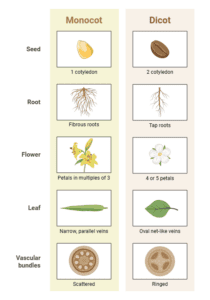
A monocotyledon (commonly referred to as a monocot) is a flowering plant that begins life with a single seed leaf, known as a cotyledon. Monocots typically have long, narrow leaves with parallel veins, flower parts in multiples of three, and fibrous root systems. Common examples include grasses, lilies, orchids, palms, and many garden flowers. Did You Know? Many of the plants we use every day are monocots, including corn, wheat, rice, bamboo, and ornamental grasses. Their distinctive leaf patterns can help visitors identify them in the landscape.
Monocotyledon
Purdue Arboretum Learning System
This glossary definition is part of the Purdue Arboretum learning resource database, providing educational information on campus flora, morphology, and botanical terminology.
Synonyms:
Monocot, Monocots, Monocotyledons
Categories:
Flower / inflorescence morphology