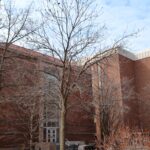
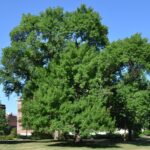
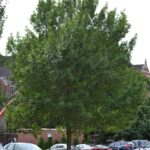
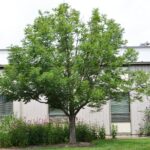
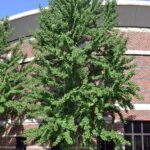
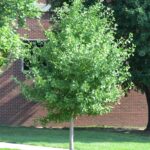
Tree Ginkgo biloba [Ginkgo] The Ginkgo is a long-lived deciduous conifer and gymnosperm. It is frequently termed a "living fossil," as it is the only surviving member of a group of ancient plants with fossils dating back to 270 million years ago. This plant is dioecious, and the so-called fruits (which are actually naked seeds with a soft seed coat) are borne on female trees, are green or tan-orange, and have an offensive odor when ripe and decaying. Fruits…
Tree Ginkgo biloba 'Autumn Gold' [Autumn Gold Ginkgo] The Ginkgo is a long-lived deciduous conifer and gymnosperm. It is frequently termed a "living fossil," as it is the only surviving member of a group of ancient plants with fossils dating back to 270 million years ago. 'Autumn Gold' is an all male, and therefore, fruitless cultivar that has outstanding golden yellow foliage in the fall. Picturesque, open branches.
Tree Ginkgo biloba 'Magyar' [Magyar Ginkgo] The Ginkgo is a long-lived deciduous conifer and gymnosperm. It is frequently termed a "living fossil," as it is the only surviving member of a group of ancient plants with fossils dating back to 270 million years ago. 'Magyar' is an all male, and therefore, fruitless cultivar that has a narrow, strongly upright habit.
Tree Ginkgo biloba 'PNI 2720' [sold as Princeton Sentry®] [Princeton Sentry Ginkgo] The Ginkgo is a long-lived deciduous conifer and gymnosperm. It is frequently termed a "living fossil," as it is the only surviving member of a group of ancient plants with fossils dating back to 270 million years ago. The Princeton Sentry Ginkgo is an all male, and therefore, fruitless cultivar that has a nearly colomnuar, narrow, upright habit.
Tree Indiana Native Gleditsia aquatica [Water Locust] This native Indiana tree species is found in three southwestern counties near the lower Wabash River. It is often found in wet or ponded locations where there is standing water or high water tables. Not recommended for the landscape as it has large, multi-pronged thorns. Like its cousin, the honey locust, it has compound leaves, but can be differentiated by its location, much smaller seed pods, and flattened thorns along the branches.
Tree Halesia carolina [Carolina Silverbell] This small tree is interesting in bloom and rather neutral otherwise, but relatively trouble free and useful in many situations as a neutral background plant, or for its flowers. Best grown as a single stem and allowed to branch low (20-30"). Does not transplant well (a particular problem with field-grown plants).
Tree Halesia carolina 'Arnold Pink' [Pink Carolina Silverbell] This small tree is interesting when in bloom with pink bell-shaped flowers that are larger than the straight species, but this plant is rather neutral otherwise. However, it is relatively trouble free and useful in many situations as a neutral background plant, or for its flowers. Best grown as a single stem and allowed to branch low (20-30"). Does not transplant well (a particular problem with field-grown plants).
Shrub Hydrangea quercifolia 'Alison' [Alison Oakleaf Hydrangea] Alison Oakleaf Hydrangea has big panicle white flowers and offers season round interest with exfoliating bark. In fall the large green leaves turn a rich burgundy-red.
Shrub Indiana Native Juniperus horizontalis [Creeping Juniper] Widely adapted to soils and climates, as evidenced by its broad natural range. Tolerates slightly alkaline and heavy clay soils, but not wet soils. Young plants can be seriously injured by Phomopsis blight in some areas. Plants of all ages are susceptible to mite infestation.