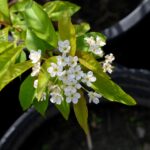
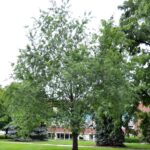
Tree Indiana Native Robinia pseudoacacia [Black Locust] Widely variable in form, the most picturesque are straight-trunked with branches abruptly fanning out at the top. Fixes N2. Locust borers are troublesome and difficult to control, but many trees live with them successfully for many years. Leaf minors and permanently wet soils can be problems.
Tree Robinia pseudoacacia 'Purple Robe' [Purple Robe Locust] This cultivar is note worthy due to is deep pink-violet flowers that have a strong sweet smelling fragrance. It is advertised to be relatively thornless.
Shrub InvasiveThis plant is considered invasive Rosa multiflora [Multiflora Rose] Highly invasive. Multiflora rose was imported from Eastern Asia in the late 1700s as an ornamental, in erosion control, and as a living fence. his bush forms dense strands that interfere with other woody species and replaces native plants on forest edges. In Indiana, it is illegal to move, plant, or distribute multiflora rose without a permit, according to DNR DEPP Admin code 312 IAC 18-3-13. It is designated a noxious weed in several states…
Shrub Rosa × 'Meisentmil' [sold as Lemon Drift®] [Lemon Drift Rose] The Lemon Drift Rose has petite yellow creamy flowers that make this shrub a beautiful statement planting. A great choice as well because the Drift Rose is disease resistant.
Shrub Rosa × 'Radwhite' [sold as White Knock Out®] [White Knock Out Rose] The White Knock Out Rose is a compact shrub with matte green foliage, making the creamy white flowers stand out against the dark leaves.
Tree Salix babylonica [Weeping Willow] The Weeping Willow is commonly found around water because they are water loving tree and can actually remove harmful substances from the water.
Shrub/Tree Indiana Native Salix humilis [Prairie Willow] Prairie Willow is more drought tolerant than other willows. Rabbits and deer eat the twigs. The nectar is used by bees to provide high quality honey.
Tree Indiana Native Sassafras albidum [Common Sassafras] Roots sucker and form thickets, which may or may not be desirable. Sassafras tea contains safrole, a mild carcinogen banned in food products. Iron chlorosis in high pH can turn leaves yellow.