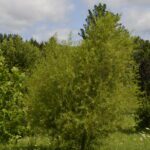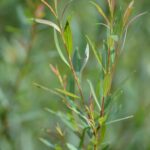
Tree Purdue Plant Doctor Available Salix babylonica [Weeping Willow] The Weeping Willow is commonly found around water because they are water loving tree and can actually remove harmful substances from the water. Purdue Plant Doctor Available
Shrub/Tree Purdue Plant Doctor Available Salix caprea [Pussy Willow] Salix caprea is one of several species commonly referred to as "Pussy Willows". The common name is derived from the silky soft male catkins (species is dioecious). Tolerates heavy pruning and can be cut to the ground every 3-5 years to maintain size. The wood of this plant is weak and easily damaged. This species is susceptible to many pests and diseases. Purdue Plant Doctor Available
Shrub/Tree Purdue Plant Doctor Available Salix eriocephala 'Ames 27768' [Heart-leaved Willow] The Heart-Leaved Willow in the wild is found along riverbanks, this tree is used for erosion control and thrives in wet soil. Purdue Plant Doctor Available
Shrub Indiana Native Purdue Plant Doctor Available Salix exigua [Coyote Willow] Salix exigua is frost tolerant and dioecious. Spreads by small seeds through the wind or water and has an extensive root system caused by abundant suckering. It is great in moist soils or stream bottoms to help prevent soil erosion. Indiana NativePurdue Plant Doctor Available
Shrub/Tree Indiana Native Audio Recording AvailablePurdue Plant Doctor Available Salix humilis [Prairie Willow] Prairie Willow is more drought tolerant than other willows. Rabbits and deer eat the twigs. The nectar is used by bees to provide high quality honey. Indiana NativeAudio Recording AvailablePurdue Plant Doctor Available
Tree Indiana Native Audio Recording AvailableID That Tree Video AvailablePurdue Plant Doctor Available Salix nigra [Black Willow] The Black Willow is a fast-growing, wet soils tolerant tree, reaching 30 to 60 feet at maturity. Can sucker profusely, so use sparingly in the landscape. In the wild, you can find Salix nigra near floodplains, streams and rivers, and marshes. The ancient Greeks knew the therapeutic values of willow (Salix) and brewed tea made from willow bark to relieve stiff joints and other bodily aches and pains. A number of insect species attack the… Indiana NativeAudio Recording AvailableID That Tree Video AvailablePurdue Plant Doctor Available
Shrub Purdue Plant Doctor Available Salix purpurea 'Canyon Blue' [Canyon Blue Purpleosier Willow] Canyon Blue Purpleosier Willow is very similar to the compact cultivar Nana in its habit and shape. What stands out is its deeper bluish leave color. This is a great choice for wet areas, soil stability, and in rain gardens. Unlike most willows (Salix ssp.), the Purpleosier tends to stay a compacted shrub and will sucker less than others in this genus. Purdue Plant Doctor Available
Shrub Purdue Plant Doctor Available Salix purpurea 'Nana' [Dwarf Purpleosier Willow] Salix purpurea 'Nana' is a dioecious, compact, rounded shrub well-suited for wet areas, rain gardens, and bank stablizition. Tolerates heavy pruning. Purdue Plant Doctor Available