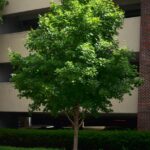
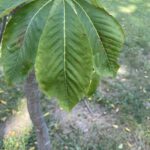
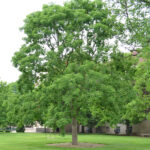
Tree Acer triflorum [Three-Flower Maple] Acer triflorum tends to be an understory tree in its natural habitat. Its beautiful exfoliating bark reveals a rusty brown coloration, providing attractive winter interest. Its shallow root system cannot handle drought well, unless properly mulched. This maple can handle full shade but is best in part shade to full sun.
Tree Acer × freemanii 'Armstrong' [Armstrong Red Maple] The Armstrong Red Maple is a cross between Acer rubrum and Acer saccharinum and is known for its columnar habit and brilliant red to red-orange fall coloration. This species has the durability of the Silver Maple and can tolerate urban conditions. The root system is less aggressive, though, so it can be planted as a street tree.
Tree Acer × freemanii 'Celzam' [sold as Celebration®] [Celebration Freeman Maple] 'Celzam' has a classic upright form with uniform growth, making for a great specimen tree in the landscape. This plant, like most Freeman hybrids, is generally seedless and is also known for its fall color. In early October, 'Celzam' becomes a brilliant red and then slowly changes to gold by late October.
Tree Acer × freemanii 'Jeffersred' [sold as Autumn Blaze®] [Autumn Blaze Maple] This cultivar is among the best for fall foliage of both Red and hybrid Red Maples. It is an extremely fast grower and appears to be more drought tolerant than most Acer rubrum cultivars. 'Jeffersred', is often sold under the tradmark name, Autumn Blaze.
Tree Acer × freemanii 'Marmo' [Marmo Freeman Maple] The Marmo Maple has similar characteristics to its Silver Maple parent, more so than to its Red Maple parent. This cultivar produces staminate flowers, and therefore is seedless. 'Marmo' fall color ranges from reds to greens. Once established, it becomes tolerant to most pests and disease.
Tree Acer × freemanii 'Scarsen' [sold as Scarlet Sentinel®] [Scarlet Sentinel Freeman Maple] This cultivar is a cross between the Red Maple and the Silver Maple, though it's leaves and bark more closely resemble the Silver Maple. It is one of the most adapted maples for southern regions of the country. 'Scarsen' is known for its colorful yellow-orange to orange-red fall foliage and columnar growth form.
Tree Indiana Native Aesculus flava [Yellow Buckeye] The Yellow Buckeye is a large, majestic native tree that is widely adapted to soils and environments; however, very dry conditions must be avoided. Drought causes early leaf drop and leaf blotch, and leaf scorch can disfigure foliage in dry soil. That being said, this species is less prone to foliar problems than the related Aesculus glabra (Ohio Buckeye) is. Difficult to transplant once established due to long taproot. Large, abundant fruits in autumn can…
Tree Indiana Native Aesculus glabra [Ohio Buckeye] Widely adapted to soils and environments; however, very dry conditions must be avoided. Drought causes early leaf drop. Leaf blotch and leaf scorch often disfigure foliage, especially in dry soil. Spiny fruits in autumn can be troublesome underfoot, and eliminates species type as a good street tree. Fruits are toxic, containing 3-5% saponins.
Shrub Indiana Native Aesculus parviflora [Bottlebrush Buckeye] Can be kept at a smaller size for a time with careful pruning, but it will in time occupy much space. Tolerates some shade, and can even be attractive under large shade trees. Suckers quite freely.
Shrub/Tree Aesculus pavia [Red Buckeye] The Red Buckeye can be a small tree or clump-forming, multi-stemmed shrub. The lustrous, deep green foliage is attractive, but tends to decline by August. Susceptible to leaf blotch, but less susceptible to mildew than Aesculus hippocastanum.