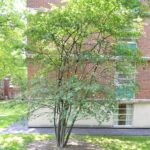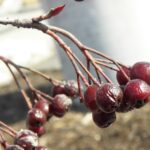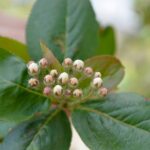
Tree Indiana Native Amelanchier arborea [Downy Serviceberry] Would grow well on a streambank. Susceptible to rust, leaf blight, powdery mildew, fruit rot, leaf minor, borers, and scale. Rarely requires pruning.
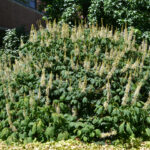
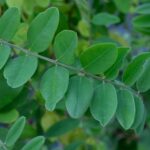
Shrub Indiana Native Amorpha fruticosa [Indigobush Amorpha] The Indigobush Amorpha is a Indiana native shrub that can be found along river banks and shallow marshes. This shrub can be planted in areas of poor soil where few other plants will survive, as well as used for erosion control. To avoid weediness, seeds can be collected shortly after flowering as it can spread readily by seeds. Common problems of Amorpha fruticosa includes rust, leaf spots, powdery mildew and twig canker. Some gall problems…
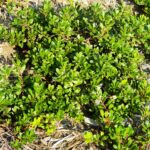
Shrub Indiana Native Arctostaphylos uva-ursi [Bearberry] Hard to establish, can develop winter burn from sun and wind when cold. Does not like excessive summer heat. Can develop foliar diseases (leaf spot) when stressed. Leaves are used to make a tea in some parts of Russia, where it is known as Kutai and Caucasian Tea. The dried leaves have been used to treat diseases of the bladder and kidney, and inflammatory diseases.
Shrub Indiana Native Aronia arbutifolia [Red Chokeberry] Red Chokeberry is often a multi-stem shrub that's native to Indiana as well as Eastern North America to Minnesota and south as far as Texas. This shrub bears white to slightly pinkish flowers with prominent anthers that gives it a unique look. Red berries form in September to often December. Best grown in mass plantings or for a naturalizing species in the landscape. Though the berries are bitter to taste, they are often used in…
Shrub Indiana Native Aronia melanocarpa [Black Chokeberry] This Indiana native shrub is similar to the Red Chokeberry in habit and form, but differs in that the Black Chokeberry is larger, has black-colored fruits, broader leaves, and generally larger flowers. Place in a higher light location for the best flower and fruit display. Best used for naturalizing, mass plantings, and wetland reclamation projects. The berries are edible, but only palatable when used in jellies and jams.
Tree Indiana Native Betula alleghaniensis [Yellow Birch] Graceful tree, interesting for its shining bark beginning yellowish or bronze and exfoliating in thin shreds, becoming reddish brown until finally forming blackish-brown plates. Especially well adapted to wet soils. Does not do well in dry situations. Less subject to the borer troubles of B. papyrifera in the Midwest.
Tree Indiana Native Betula nigra [River Birch] Graceful tree, interesting for its curling bark, and especially well adapted to wet soils. Immune to the bronze birch borer, which is a serious problem for the native Betula papyrifera in the Midwest. This species prefers full sun and is quite heat tolerant, but does not have tolerance for drought. If pruning is required, prune in summer or during the dormant season.
Tree Betula nigra 'Cully' [sold as Heritageā¢] [Heritage River Birch] This vigorous cultivar makes a graceful tree, interesting for its richly colored, strongly curling bark and large, glossy leaves. It is somewhat resistant to leaf spot and is especially well adapted to wet soils. Immune to the bronze birch borer, which is a serious problem for the native Betula papyrifera in the Midwest. This species prefers full sun and is quite heat tolerant, but does not have tolerance for drought. If pruning is required, prune…
Tree Indiana Native Betula populifolia [Gray Birch] Beautiful white bark, although becomes dirty gray with age. Does well on the poorest of sterile soils, seeds, and suckers quickly. Grows on sandy, rocky and even gravelly sites. Tolerates both wet and dry conditions. Prefers full sun. Susceptible to leaf miner and cankers; more resistant to the bronze birch borer. Leaf minors especially problematic.
Shrub Buxus 'Glencoe' [Chicagoland Green Buxus] Low maintenance cultivar popularized in Illinois through partnership with the Chicago Botanic Garden. Broad mounded shrub that is a fast grower in full sun.