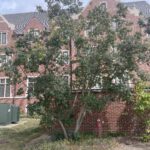
Shrub/Tree Cotinus obovatus [American Smoketree] Cotinus obovatus can be a large shrub or small tree and is most noted for its extraordinary fall color and fluffy, smoke-like fruiting panicles. It is a tough plant, adapted to poor, rocky, limestone soils.
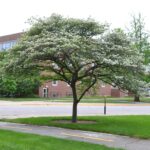
Tree Indiana Native Crataegus crus-galli [Cockspur Hawthorn] The strong horizontal branching is good for softening vertical lines of buildings. The 2-3" thorns can be dangerous, especially around children. Although attractive, some find the small, white flowers malodorous. Fireblight, leaf spot, and cedar-hawthorn rust are among the worst problems to affect this species. Japanese beetles like to feed on hawthorns.
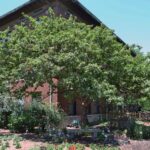
Tree Indiana Native Crataegus mollis [Downy Hawthorn] Quite susceptible to cedar-hawthorn rust, with leaves heavily spotted with orange in some years. Rust limits usage in many areas. Large fruit pose a maintenance issue when they drop.
Shrub Indiana Native Dasiphora fruticosa [Bush Cinquefoil] Extreme hardiness and long season of bloom make this a favorite in severe climates. Low stature and tolerance of poor, dry soils give it added usefulness in other areas also. Can develop a ragged, unkept habit over time. Remove 1/3 of canes each year (3-year pruning cycle), and consider renewal pruning to a very low framework every 3-5 years if needed.
Tree Indiana Native Diospyros virginiana [Common Persimmon] Most are usually dioecious and have a deep tap root which makes large plants difficult to transplant. Flowers attract bees while the fruit attracts birds and many mammals. The fruit is astringent when green, sweet and edible when ripe. Fruits, twigs, and leaves can be a littler problem.
Tree Diospyros virginiana 'Meader' [Meader Persimmon] Most usually dioecious. Flowers attract bees. Fruit attracts birds and many mammals. The fruit is astringent when green, sweet and edible when ripe. Fruits, twigs, and leaves can be a littler problem. Deep tap root makes large plants difficult to transplant. Can be poisonous to horses. ‘Meader’ is a self-fertile cultivar usually producing fruit after 2-3 years.
Shrub Indiana Native Dirca palustris [Leatherwood] Dirca palustris is a small, dense, quite rounded, Indiana native shrub with excellent yellow fall coloration. Although it is generally uncommon in the wild, Leatherwood can be found growing naturally and thriving along the ravines of Turkey Run State Park in Marshall, IN. This plant requires rich, moist, acidic soils and should be protected from intense sun. Leatherwood fruits, bark, and roots are poisonous.
Shrub Indiana Native Euonymus americanus [American Euonymus] The American Euonymus is a small, suckering shrub that is native to the eastern portions of the United States, west to Texas. Normally, the American Euonymus can be found in woodlands and can tolerate deep shade and a wide range of soil types. Its flowers are unusual for Euonymus because of its five-petaled flowers instead of the usual four for most other Euonymus species. Other common names, such as Strawberry-bush or Hearts-a-Burstin, are derived from…
Shrub/Tree Indiana Native Euonymus atropurpureus [Eastern Wahoo] The Easter Wahoo is an Indiana native shrub/small tree that can be found in open woods or along forest edges and is grown for its attractive red fruits and great fall color. Due to its irregular habit, the Eastern Wahoo can be an issue in the formal landscape, but regular pruning can fix this issue. Far less invasive than the infamous Euonymus alatus (Winged Euonymus or Burning Bush). Flowers are small, rich purple that bloom…
Tree Indiana Native Fagus grandifolia [American Beech] In a proper site, an excellent trouble-free shade tree with year-round interest. Less adaptable to hot, dry conditions than the exotic F. sylvatica, but somewhat more cold hardy. F. grandifolia is preferred in Zone 4. Like F. sylvatica, this tree is so shallow rooted and casts such heavy shade that grass does not grow well beneath it. Low branching habit is a concern for use in the tree lawn as a street tree (may require…