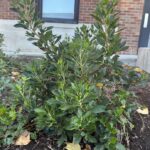
Shrub Cornus sericea 'Baileyi' [Red Twig Dogwood] A shrub with a rounded habit, bright red stems that persist into winter, dark green ovate-laceolate leaves, and white cymes in spring. It has many uses borders, naturalizing, specimen, erosion control, and in moist soils.
Shrub Cornus sericea 'Cardinal' [Red Twig Redosier Dogwood] The Cardinal Red Twig Dogwood has attractive, strongly red stems, providing winter interest to the landscape. It is a larger variant that has better resistance to leaf spot than other cultivars. Grows well in a variety of situations, including wet soil. Easy to transplant. Relatively trouble-free. A three-year pruning cycle improves form, vigor, and winter stem color effect. Cutting all stems 6-12" from ground in late winter has similar effect. Best in mass plantings. Excellent…
Tree Cornus × 'Rutgan' [sold as Stellar Pink®] [Stellar Pink Dogwood] Stellar Pink is a hybrid between Cornus florida x Cornus kousa, released by Rutgers University. It is a small deciduous tree with a dense, upright habit, noted for having good resistance to anthracnose and dogwood borer.
Shrub/Tree Cotinus obovatus [American Smoketree] Cotinus obovatus can be a large shrub or small tree and is most noted for its extraordinary fall color and fluffy, smoke-like fruiting panicles. It is a tough plant, adapted to poor, rocky, limestone soils.
Shrub/Tree Cotinus × 'Grace' [Grace Smokebush] 'Grace' has become a popular cultivar with its purple emerging leaves and giant panicles of smokey, pink flowers. The "flowers" are actually misty fruiting panicles that give the species its name. The fine-textured hairs on the fruit pedicels and peduncles change colors, being best when tinted smoky pink. Can be pruned to low framework each year to promote plant coloration which occurs best on vigorous stems.
Tree Indiana Native Crataegus crus-galli [Cockspur Hawthorn] The strong horizontal branching is good for softening vertical lines of buildings. The 2-3" thorns can be dangerous, especially around children. Although attractive, some find the small, white flowers malodorous. Fireblight, leaf spot, and cedar-hawthorn rust are among the worst problems to affect this species. Japanese beetles like to feed on hawthorns.
Tree Crataegus crus-galli var. inermis 'Cruzam' [sold as Crusader™] [Crusader Thornless Cockspur Hawthorn] This variant of Cockspure Hawthorn is a thornless type. The strong horizontal branching is good for softening vertical lines of buildings. Although attractive, some find the small, white flowers malodorous. Fireblight, leaf spot, and cedar-hawthorn rust are among the worst problems to affect this species. Japanese beetles like to feed on hawthorns.
Tree Indiana Native Crataegus mollis [Downy Hawthorn] Quite susceptible to cedar-hawthorn rust, with leaves heavily spotted with orange in some years. Rust limits usage in many areas. Large fruit pose a maintenance issue when they drop.
Tree Indiana Native Crataegus phaenopyrum [Washington Hawthorn] One of the finest small trees for winter color. The 1-3" thorns can be dangerous, especially around children. Fireblight, leaf spot, and cedar-hawthorn rust are among the worst problems, although more trouble-free than many hawthorns. Japanese beetles like to feed on hawthorns.
Tree Indiana Native Crataegus viridis [Green Hawthorn] An attractive small tree with beautiful white flower corymbs and bright red persistent fruits. Very adaptable, although leaves are often badly infected by rust so that the entire plant appears to be suffering from the measles.