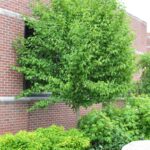
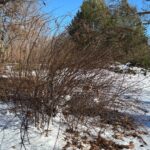
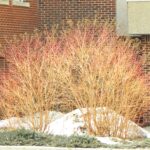
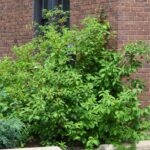
Shrub Forsythia × intermedia 'Golden Bells' [Golden Bells Forsythia] The Golden Bells Forsythia flowers in early spring, golden flowers cover the bare shrub as the emerge before foliage. Groups or clusters are produced along the stems although, Forsythias only bloom on old wood, leaves sprout shortly after bloom and are medium to dark green in the summer season.
Shrub/Tree Indiana Native Frangula caroliniana [Carolina Buckthorn] Handsome shrub or small tree with dark green, 8 to 10 vein-paired leaves. Fruits are 1/3" diameter, globose and has a sweet taste to it. Changes from red to black as it matures. Fruit ripes (Red) in August and remain on the plant until October or later, by which time it turns black.
Tree Indiana Native Fraxinus americana [White Ash] Not as adaptable as Green Ash but has better esthetics. Heavy crops of seeds on female trees cause litter, and these germinate freely making the tree slightly weedy. An unattractive ash flower gall (caused by mites) can develop on male flowers and persist into winter. Subject to storm damage, so plant in areas that shelter the tree from strong winds. Emerald Ash Borer is severely affecting all species of this genus. Damage can be prevented…
Tree Indiana Native Fraxinus pennsylvanica [Green Ash] Produces many weed seedlings, except for seedless cultivars. An unattractive ash flower gall (formed by mites) can develop on male flowers and persists into winter. Emerald Ash Borer is severely affecting all species of this genus. Damage can be prevented with the appropriate pesticide, but the treatment cost will eventually exceed replacement cost.
Tree Indiana Native Fraxinus quadrangulata [Blue Ash] The Blue Ash earned its common name from the blue dye made by early Americans from the inner bark, which contains a substance that turns blue with exposure to air. This tree is naturally found upland in dry, rocky limestone areas and is very drought tolerant. As with all ashes, Fraxinus quadrangulata is extremely susceptible to the Emerald Ash Borer. Damage from this pest can be prevented with the soil drench method imidacloprid, but the…
Tree Indiana Native Gleditsia triacanthos f. inermis [Thornless Common Honeylocust] This large tree has finely compound leaves that provide a pleasant, dappled shade in the summer. The thornless forma inermis is only sold in commerce, as the profuse thorns of the species type can be a liability. Mimosa webworm and locust mite are serious pests in the Midwest, and are becoming more serious (especially in areas tending toward monoculture). Can be controlled with spraying.
Tree Indiana Native Gymnocladus dioicus [Kentucky Coffeetree] Gymnocladus dioicus is a large deciduous tree with strong winter character from the branches and bark. Drops pods (female trees) and twigs, frequently causing litter problem, thus eliminating the straight species as a good street tree. Seeds were once used by US settlers as a coffee substitute, however pulp and seeds are toxic when not properly and completely roasted.
Tree Halesia carolina [Carolina Silverbell] This small tree is interesting in bloom and rather neutral otherwise, but relatively trouble free and useful in many situations as a neutral background plant, or for its flowers. Best grown as a single stem and allowed to branch low (20-30"). Does not transplant well (a particular problem with field-grown plants).
Tree Halesia carolina 'Arnold Pink' [Pink Carolina Silverbell] This small tree is interesting when in bloom with pink bell-shaped flowers that are larger than the straight species, but this plant is rather neutral otherwise. However, it is relatively trouble free and useful in many situations as a neutral background plant, or for its flowers. Best grown as a single stem and allowed to branch low (20-30"). Does not transplant well (a particular problem with field-grown plants).