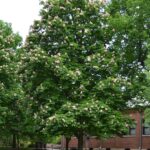
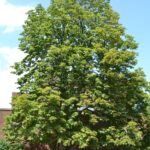
Tree Audio Recording AvailablePurdue Plant Doctor Available Aesculus hippocastanum 'Baumannii' [Baumann Common Horsechestnut] 'Baumannii' is known for its large panicles of double flowers. The flowers are sterile, so none of the large, littering, poisonous fruit of the species type are produced, increasing this tree's usability. Widely adapted to soils and environments; however, very dry conditions must be avoided. Leaf blotch often disfigures foliage. Audio Recording AvailablePurdue Plant Doctor Available
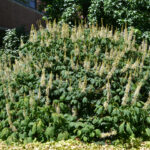
Shrub Indiana Native Audio Recording AvailablePurdue Plant Doctor Available Aesculus parviflora [Bottlebrush Buckeye] Can be kept at a smaller size for a time with careful pruning, but it will in time occupy much space. Tolerates some shade, and can even be attractive under large shade trees. Suckers quite freely. Indiana NativeAudio Recording AvailablePurdue Plant Doctor Available
Shrub/Tree Purdue Plant Doctor Available Aesculus pavia [Red Buckeye] The Red Buckeye can be a small tree or clump-forming, multi-stemmed shrub. The lustrous, deep green foliage is attractive, but tends to decline by August. Susceptible to leaf blotch, but less susceptible to mildew than Aesculus hippocastanum. Purdue Plant Doctor Available
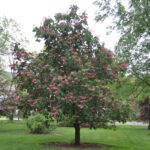
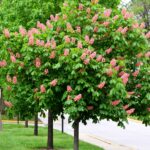
Tree Audio Recording AvailablePurdue Plant Doctor Available Aesculus × carnea [Red Horsechestnut] More drought resistant and more resistant to blotch and mildew than A. hippocastanum. Comes true to type from seed. Flowers at early age. Does not perform well in dry sites. Prickly fruits may be a problem underfoot. Fruits are poisonous (containing toxic saponins). Often develops branches having narrow crotch angles (branches that should be removed). Audio Recording AvailablePurdue Plant Doctor Available
Tree Audio Recording AvailablePurdue Plant Doctor Available Aesculus × carnea 'Fort McNair' [Fort McNair Red Horsechestnut] Fort McNair Red Horsechestnut is less suscebtible to leaf scorch, leaf blotch and mildew than the straight species, although it can still contract the diseases. Does not perform well in dry sites; plant in moister soils for best growth and flowering. Flowers at an early age. Prickly fruits may be a problem underfoot. Fruits are poisonous (containing toxic saponins). Often develops branches having narrow crotch angles (branches that should be removed). Audio Recording AvailablePurdue Plant Doctor Available
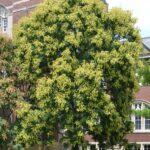
Tree Audio Recording Available Koelreuteria paniculata [Goldenraintree] Colorful small tree in bloom and interesting for its form. Tolerates heat, drought, wind, alkaline soils, and air pollution. Newly emerging leaves can be damaged by late spring freezes. Rather weak-wooded. Can be damaged or killed by –25 degrees F. Invasive in some parts of the country. Audio Recording Available