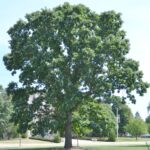
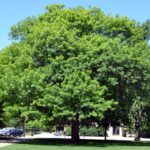
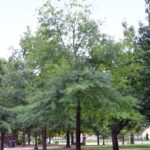
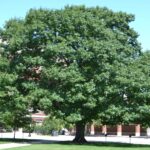
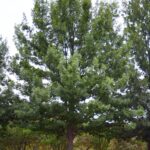
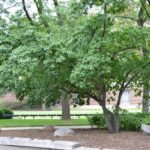
Tree Audio Recording AvailablePurdue Plant Doctor Available Ulmus parvifolia [Lacebark Elm] Stunning, multi-colored mottled and exfoliating bark. Grows well under city conditions. Good resistance against Dutch elm disease, elm leaf beetle, and Japanese beetle. Slightly weak wooded, so sometimes damaged by ice storms. Audio Recording AvailablePurdue Plant Doctor Available
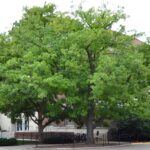
Tree Audio Recording AvailablePurdue Plant Doctor Available Ulmus parvifolia 'Emer II' [sold as Allee®] [Allee Lacebark Elm] Stunning, multi-colored mottled and exfoliating bark, even on the surface roots. Tends to maintain foliage well during droughts. Grows well under city conditions. Resistant to Dutch elm disease and the elm leaf beetle. Audio Recording AvailablePurdue Plant Doctor Available
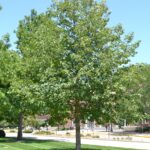
Tree Audio Recording AvailablePurdue Plant Doctor Available Ulmus parvifolia 'UPMTF' [sold as Bosque®] [Bosque Lacebark Elm] Stunning, multi-colored, mottled, and exfoliating bark. Grows well under city conditions. Good resistance against Dutch elm disease, elm leaf beetle, and Japanese beetle. Slightly weak wooded, sometimes damaged by ice storms. Audio Recording AvailablePurdue Plant Doctor Available
Shrub Indiana Native Audio Recording Available Vaccinium angustifolium [Lowbush Blueberry] The Lowbush Blueberry requires acidic soils with a pH between 4.5 and 5.5. Iron chlorosis can be a problem in higher pH soils. Mulch around roots to maintain high organic matter. For higher blossom and berry output, grow in full sun. Berries are sweet and edible. Indiana NativeAudio Recording Available
Shrub Indiana Native Audio Recording AvailableID That Tree Video AvailablePurdue Plant Doctor Available Viburnum acerifolium [Mapleleaf Viburnum] The Mapleleafe Viburnum is a shade and drought tolerant plant that is excellent for naturalizing. Tolerant to the poison excreted by Black Walnuts. Indiana NativeAudio Recording AvailableID That Tree Video AvailablePurdue Plant Doctor Available
Shrub Indiana Native Audio Recording AvailablePurdue Plant Doctor Available Viburnum dentatum [Arrowwood Viburnum] Can look ragged in dry soil. Flowers malodorous to some. Attractive to birds. Name derived from Native American use of strong sucker shoots for arrow shafts. The most durable of viburnums. Serves as a nice neutral background shrub. Indiana NativeAudio Recording AvailablePurdue Plant Doctor Available
Shrub Audio Recording AvailablePurdue Plant Doctor Available Viburnum dilatatum [Linden Viburnum] One of the best viburnums for showy fruits. A different clone as a pollinator helps produce a more abundant fruit set. Borers can sometimes be a problem. Relatively trouble-free. Audio Recording AvailablePurdue Plant Doctor Available
Shrub Purdue Plant Doctor Available Viburnum dilatatum 'Erie' [Erie Linden Viburnum] Purdue Plant Doctor Available
Shrub Audio Recording AvailablePurdue Plant Doctor Available Viburnum opulus [European Cranberrybush Viburnum] Widely tolerant of soils and microclimates, although found in more wet sites in wild stands. May be troubled by aphids. The snowball variety, V. opulus 'Roseum', is badly troubled by aphids. Prune on a 3-year cycle to maintain best form and fruiting. Flower cymes have an outer showy and sterile ring and an inner inconspicuous and fertile cluster which produces the berries. Audio Recording AvailablePurdue Plant Doctor Available
Shrub/Tree Indiana Native Audio Recording AvailableID That Tree Video AvailablePurdue Plant Doctor Available Viburnum prunifolium [Blackhaw Viburnum] Widely tolerant of different soils and exposures. Transplants well. Relatively trouble-free. Can be pruned to form a nice hedge. Scale and borers are occasional problems. The edible fruits are sweet and can be eaten fresh, or used in jams and preserves. Indiana NativeAudio Recording AvailableID That Tree Video AvailablePurdue Plant Doctor Available