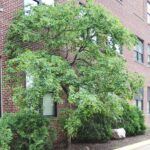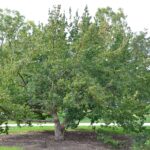
Tree Indiana Native Audio Recording AvailableID That Tree Video Available Diospyros virginiana [Common Persimmon] Most are usually dioecious and have a deep tap root which makes large plants difficult to transplant. Flowers attract bees while the fruit attracts birds and many mammals. The fruit is astringent when green, sweet and edible when ripe. Fruits, twigs, and leaves can be a littler problem. Indiana NativeAudio Recording AvailableID That Tree Video Available
Herbaceous Purdue Plant Doctor Available Echinacea 'Tomato Soup' [sold as Tomato Soup Coneflower] [Tomato Soup Coneflower] Purdue Plant Doctor Available
Shrub Audio Recording AvailableID That Tree Video AvailablePurdue Plant Doctor Available Euonymus fortunei 'Vegetus' [Vegetus Wintercreeper Euonymus] This cultivar has a more shrub-like habit than the species type, but can be moderately effective as a groundcover or wall climber. Also much heavier fruiting than the straight species; the fruiting display can be quite attractive, if fruits are borne in high enough numbers. Very susceptible to Euonymus Scale. Audio Recording AvailableID That Tree Video AvailablePurdue Plant Doctor Available
Tree Indiana Native ID That Tree Video AvailablePurdue Plant Doctor Available Gleditsia aquatica [Water Locust] This native Indiana tree species is found in three southwestern counties near the lower Wabash River. It is often found in wet or ponded locations where there is standing water or high water tables. Not recommended for the landscape as it has large, multi-pronged thorns. Like its cousin, the honey locust, it has compound leaves, but can be differentiated by its location, much smaller seed pods, and flattened thorns along the branches. Indiana NativeID That Tree Video AvailablePurdue Plant Doctor Available
Herbaceous Purdue Plant Doctor Available Heliopsis helianthoides var. scabra 'Summer Sun' [sold as Summer Sun Rough Sunflower] [Summer Sun False Sunflower] Purdue Plant Doctor Available
Shrub Audio Recording AvailablePurdue Plant Doctor Available Hypericum calycinum [Creeping St. John's Wort] Relatively trouble-free. Tolerates dry conditions well (even drier shade). Generally, tops are killed back in severe winters near its limit of hardiness. Mowing to the ground each spring improves aesthetics of the following regrowth. Slow to leaf out in spring. Can be invasive via spreading stolons. Poisonous to animals. Audio Recording AvailablePurdue Plant Doctor Available
Tree Audio Recording Available Kalopanax septemlobus [Castor Aralia] No disease or insect problems. Stout prickles could cause injury. Slight weediness via the seeds. Not common in commerce. Audio Recording Available
Tree Audio Recording Available Koelreuteria paniculata [Goldenraintree] Colorful small tree in bloom and interesting for its form. Tolerates heat, drought, wind, alkaline soils, and air pollution. Newly emerging leaves can be damaged by late spring freezes. Rather weak-wooded. Can be damaged or killed by –25 degrees F. Invasive in some parts of the country. Audio Recording Available
Shrub/Tree Audio Recording AvailablePurdue Plant Doctor Available Lagerstroemia indica [Common Crapemyrtle] Can be grown as a tree or shrub. This species prefers hot sunny sites. For Zones 5 and 6, apply winter mulch to protect roots. Flower color ranges from white, pink, purple, or deep red that terminates the current year's growth. Long flowering period from July to September. Can have problems with powdery mildew. Audio Recording AvailablePurdue Plant Doctor Available
Shrub Audio Recording AvailablePurdue Plant Doctor Available Lavandula angustifolia [Common Lavender] Beautiful, fragrant purple flowers and foliage. Great plant for fine texture in the front landscape borders. Pruning to the ground every 3 to 4 years keeps the foliage full to the ground and produces uniform, fresh new growth. Audio Recording AvailablePurdue Plant Doctor Available