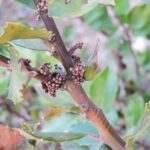
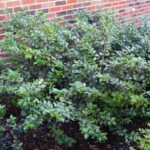
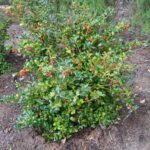
Shrub Ilex × meserveae 'Conablu' [sold as Blue Prince®] [Blue Prince Meserve Holly] This male cultivar of the Meserve Holly is an excellent pollinator known for its hardiness, beautiful, lustrous, dark blue-green foliage, and dense habit. The Meserve Holly, like other hollies, is dioecious, so plant females for fruit and an occasional male for pollination. Blue Prince is considered to be a good pollinator for Blue Princess ('Conapry'). Winter desiccation injury to leaves occurs in exposed sites.
Shrub Ilex × meserveae 'Conapry' [sold as Blue Princess®] [Blue Princess Meserve Holly] This female cultivar of the Meserve Holly is known for its hardiness, beautiful, lustrous, dark blue-green foliage, and heavily borne dark red fruits. The Meserve Holly, like other hollies, is dioecious, so plant females for fruit and an occasional male for pollination. Blue Prince ('Conablu') is considered a good male pollinator for Blue Princess. Winter desiccation injury to leaves occurs in exposed sites.
Shrub Ilex × 'Mesog' [sold as China Girl®] [China Girl Holly] 'China Girl' is a dense, rounded holly hybrid with lustrous evergreen foliage. This cultivar is female and 'China Boy' is the pollinator if fruit set is desired. Winter desiccation injury to leaves in exposed sites.
Shrub Itea virginica 'Sprich' [sold as Little Henry™] [Dwarf Virginia Sweetspire] The Little Henry Virginia Sweetspire is a compact, dwarf cultivar that has excellent flowers and fall color. Quite drought and pH tolerant although best situated in moist areas with some acidity. Flowers best in full sun, but is shade tolerant. Pruning sometimes needed to maintain form, primarily for removal of wayward branches. Avoid pruning in late fall or winter as flowers form on previous season's wood. Susceptible to flea beetle and leaf spot.
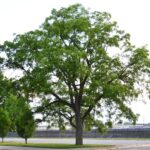
Tree Indiana Native Juglans cinerea [Butternut] Juglans cinera is a large, rounded tree similar to, but overall smaller than the Black Walnut (Juglans nigra). It is not commonly grown for ornamental purposes. The nut, once one is able to crack the hard shell, is edible, sweet, oily, and buttery. Long tap root makes transplanting difficult. This species is valued for its wood and between overharvesting and losses from Butternut Canker (Sirococcus clavigignenti-juglandacearum), this species has become rare in its native habitat.
Tree Indiana Native Juglans nigra [Black Walnut] Nuts are a serious litter problem, staining sidewalks and driveways. Juglone (found in leaf litter and possibly roots) is toxic to many plants, like tomatoes, blackberries, red pines, and many others. Black Walnut wood is valuable and has a variety of commercial uses, especially for furniture.
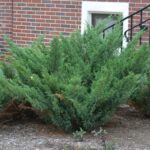
Shrub Juniperus sabina 'Blaue Donau' [sold as Blue Danube™] [Blue Danube Savin Juniper] This cultivar has blue-green foliage on moderately-upright, arching branches. Widely adapted to soils and climates. Tolerant of slightly alkaline soils. Variable in form, resulting in several distinct varietal forms. Young plants can be injured by juniper blight in some areas. Plants of all ages are susceptible to mite infestation. Does not do well in high humidity and high night temperature environments. Can develop a dingy green color in winter; does not develop a purple-tinge in…
Shrub Juniperus squamata [Singleseed Juniper] Juniperus squamata is a shrub species that can be quite variable in size and form. This plant gained its common name from the single seed borne by each cone. Widely adapted to soils and climates. Does well in alkaline soils, but not wet soils. Susceptible to bagworms.
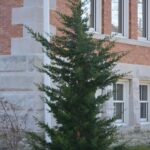
Tree Juniperus virginiana 'Burkii' [Burk Eastern Redcedar] 'Burkii' is a pyramidal male cultivar with glaucous silvery blue foliage. Widely adapted to soils and climates. Does well in alkaline soils, but not wet soils. Alternate host for cedar-apple rust disease. Plant other juniper species in areas having many apples, hawthorns, etc. Susceptible to bagworms.
Tree Juniperus virginiana 'Canaertii' [Canaert Eastern Redcedar] 'Canaertii' is a picturesque, pyramidal female cultivar that produces a profusion of bloomy blue berries (cones). Widely adapted to soils and climates. Does well in alkaline soils, but not wet soils. Alternate host for cedar-apple rust disease, and 'Canaertii' is especially susceptible. Plant other juniper species in areas having many apples, hawthorns, etc. Susceptible to bagworms.