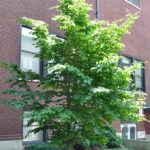
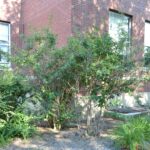
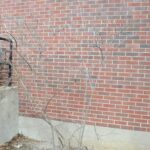
Tree Prunus × incam 'Okame' [Okame Cherry] 'Okame' is a small cherry tree that performs well in the landscape and provides multi-season interest with beautiful, pink flowers very early in the spring, handsome dark green summer foliage, excellent orange, red, and bronze fall color, and shining, reddish bark in the winter.
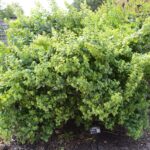
Shrub Prunus laurocerasus 'Otto Luyken' [Otto Luyken Cherry Laurel] 'Otto Luyken' is a broad, compact evergreen shrub that produces numerous small, fragrant, white flowers in upright clusters in mid to late spring. This plant is shade tolerant, pH adaptable, and salt spray tolerant, but requires good drainage. Do not over fertilize.
Tree Prunus padus [European Bird Cherry] The European Birdcherry is a rounded, low branching tree that produces long, drooping clusters of fragrant white flowers in the spring after the leaves have emerged (leafs out early). Black knot, leaf spot, and canker can potentially be a problem.
Tree Indiana Native Prunus pensylvanica [Pin Cherry] Pin or Wild Red Cherry is a slender, small shrub-like tree that is native to Indiana. Often seen as a pioneer species, Pin Cherry can be seen to develop in vacant areas. Its bark is shiny, red in color, and often aromatic when brusied or cut. P. pensylavnica produces a large amount of fruit when fully mature, which could promote weediness.
Shrub Indiana Native Prunus pumila [Sand Cherry] Prunus pumila is a creeping, low-growing small shrub naturally found in sandy locations, such as dunes, where it acts an important stabilizer. The cherry fruits are too bitter to eat fresh, but can be used in jams and jellies.
Tree Indiana Native Prunus serotina [Black Cherry] Probably the best native-American species of cherry for landscape use, but still useful only in a few situations, especially for naturalizing. A valuable timber tree, especially for furniture. Subject to several minor pests, none usually serious in naturalized situations. Wood is slightly brittle. Eastern tent caterpillar problematic is some years.
Tree Prunus serrulata 'Sekiyama' [Sekiyama Japanese Flowering Cherry] The Japanese Flowering Cherry prefers rich, moist, well-drained loams and full sun. It can tolerate part shade (at the expense of blooms), as well as heat, humidity, and even some drier soils (once it is established). This tree is susceptible to many pests, including leaf spot, powdery mildew, fireblight, Japanese beetles, aphids, scale, borers, leafhoppers, and caterpillars. 'Kwanzan', which is also known as 'Kanzan' or 'Sekiyama,' grows 30 to 40 feet high. This variant, sometimes…
Shrub/Tree Prunus sp. [Cherry] Prunus is a large and important genus of over 400 species of mostly deciduous trees and shrubs, in addition to countless hybrids. Important members of this genus include cherries, almond, peaches, plums, and apricots. Prunus can be subject to many pests and diseases.
Shrub/Tree Indiana Native Prunus virginiana [Common Chokecherry] The Common Chokecherry can be a suckering small tree or large shrub that produces fragrant white racemes followed by small, purple-black cherries. These fruits can be used for pies, jellies, and jams (do not eat fresh). Suckers must be immediately removed to control growth.
Shrub/Tree Indiana Native Ptelea trifoliata [Hoptree] A widely adaptable species which performs best in well-drained soils, can be grown in full sun or even under heavy shade. This plant is susceptible to several leaf spot and even a rust disease, but none are serious. It's fruit can also be use as a substitute for hops, thus giving rise to one of its common name: the 'Hoptree'. This tree's bark can also be utilized for medical purposes, and its stems when bruised…