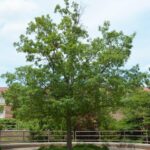
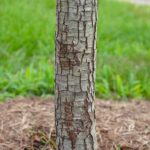
Tree Indiana Native Quercus imbricaria [Shingle Oak] Somewhat tolerant of city conditions. Can be pruned into a hedge. Leaves persist into winter, after the normal leaf raking period, and then fall. Oak gall susceptible, but a minor problem.
Tree Indiana Native Quercus pagoda [Cherrybark Oak] Generally only hardy up to zone 6, this oak is larger than the closely related Southern Red Oak (Quercus falcata) and prefers wetter sites. It is native to southeastern regions of the United States and naturally grows as far north as southern Indiana and Illinois.
Shrub Rhododendron catawbiense 'Chionoides' [Chionoides Rhododendron] White flowers have the yellow centers and make numerous dome shaped trusses. The broad, dense plant is easy to grow and has attractive, narrow foliage.
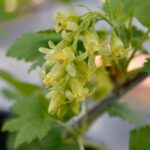
Shrub Indiana Native Ribes americanum [American Black Currant] American Black Currant is a shade and wet soil tolerant shrub species often found in our Indiana woodlands. Small greenish-white flowers bloom in May which leads to dark red to black fruits that ripen in late August/September. When placed in full sun, a brilliant reddish orange fall color is produced but often golden yellow in the fall. The edible fruits are used in jams and jellies and are desirable food source for wildlife. An alternative…
Shrub Rosa × 'Radwhite' [sold as White Knock Out®] [White Knock Out Rose] The White Knock Out Rose is a compact shrub with matte green foliage, making the creamy white flowers stand out against the dark leaves.
Shrub Indiana Native Rubus odoratus [Flowering Raspberry] The Flowering Raspberry offers great texture into the landscape with its exfoliating bark during the winter months and its large course leaves during the summer months. Its rich, pink-purple flowers begin to bloom in early June, offering fragrance and color. The flowers and fruits often attract birds and other wildlife, including butterflies and bees.
Shrub Indiana Native Salix exigua [Coyote Willow] Salix exigua is frost tolerant and dioecious. Spreads by small seeds through the wind or water and has an extensive root system caused by abundant suckering. It is great in moist soils or stream bottoms to help prevent soil erosion.