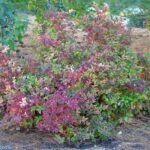
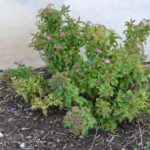
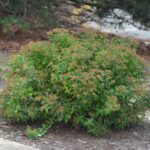
Shrub Spiraea japonica [Japanese Spirea] Flowers heavily in June (on new growth) and then continues intermittently through August. Annual pruning results in better foliage and flower effect. Tolerant of widely different soils and exposures, but tends to do best in full sun with adequate moisture and a pH of 6.0-7.5. Avoid very wet sites.
Shrub Spiraea japonica 'Dolchica' [Dolchica Japanese Spirea] 'Dolchica' has deep pink flowers and interesting crinkled and cutleaf foliage. Flowers heavily in June (on new growth) and then continues intermittently through August. Annual pruning results in better foliage and flower effect. Tolerant of widely different soils and exposures, but tends to do best in full sun with adequate moisture and a pH of 6.0-7.5. Avoid very wet sites.
Shrub Spiraea japonica 'Genpei' [Genpei Japanese Spirea] 'Genpei' (also seen sold as 'Shirobana' and 'Shibori') is an excellent, mounded cultivar that produces flower clusters that can be pink, deep rose, or white, or a combination. Flowers heavily in June (on new growth), and then continues intermittently through August. Annual pruning results in better foliage and flower effect. Tolerant of widely different soils and exposures, but tends to do best in full sun with adequate moisture and a pH of 6.0-7.5. Avoid very…
Shrub Spiraea japonica 'Goldflame' [Golden Japanese Spirea] 'Goldflame' is known for foliage that rotates between different golds, yellows, and bronzes throughout the seasons. In the spring, the foliage emerges bronze-red, followed by yellow-green foliage in the summer, and finally becoming golden yellow to orange in the fall. Flowers heavily in June (on new growth) and then continues intermittently through August. Annual pruning results in better foliage and flower effect. Tolerant of widely different soils and exposures, but tends to do best in…
Shrub Spiraea japonica 'Little Princess' [Little Princess Spirea] Grows larger and faster than species
Shrub Spiraea × vanhouttei [Vanhoutte Spirea] The Vanhoutte Spirea is a tough shrub with a beautiful, fountain-like habit. In late spring, the long, gracefully arching branches are covered in numerous white flowers. Moderately drought tolerant. May be affected by leaf spot.
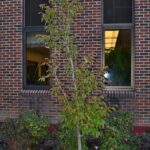
Tree Stewartia pseudocamellia [Japanese Stewartia] In the wild, this specimen can grow up to 60' high, much larger than the mature landscape tree which ranges from 20-40' high. The outstanding, multi-colored bark is rich and flaking, ranging from soft grays and browns to orangish brown. There are no serious pests or diseases for this specimen.
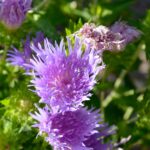
Herbaceous Stokesia laevis 'Purple Parasols' [Purple Parasols Stokes' aster] Native to wetlands of the southeast United States, Stoke's aster is an evergreen perennial with fluffy blue violet flowers. There are no serious issues to watchout for with this plant, although they need to be monitored for caterpillars.
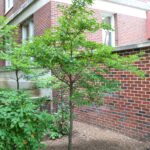
Tree Styrax japonicus [Japanese Snowbell] Relatively trouble-free. Can be susceptible to Ambrosia beetle and canker. Partial shade best in Zones 7 and 8 due to heat intolerance.
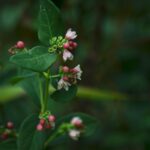
Shrub Indiana Native Symphoricarpos albus [Common Snowberry] Useful as a bank cover or large scale groundcover. Transplants well. This plant has a beautiful fruit show and is shade tolerant, however, it is also a twiggy, "garbage can plant" (collects leaves and blowing debris); this quality (especially prominent in the fall and winter) limits its usability in the landscape.