Shrub Hydrangea macrophylla 'Robert' [sold as Let's Dance Moonlight™] [Let's Dance Moonlight Bigleaf Hydrangea] Let's Dance Moonlight Bigleaf Hydrangea is a mophead cultivar that reblooms throughout the late summer months (July-September). Slightly more compact than the straight species, Let's Dance Moonlight cultivar typically grows 2 to 3' in height and in width. Like most of hydrangeas, flower color depends on the acidity of the soil (blue for more acidic and pink for more basic soils). Best use of this shrub would be in mass plantings.
Shrub Hydrangea paniculata [Panicle Hydrangea] Very hardy and adaptable plant, difficult to kill. So coarse, the straight species does not always combine well in the landscape. Remove grown flowers late in fall as they are not attractive. Can become straggly and unkempt with age.
Shrub Hydrangea paniculata 'Ilvobo' [sold as Bobo®] [Bobo Panicle Hydrangea] This particular cultivar of the panicle hydrangea is a small deciduous shrub ranging from 6 to 10' in height and known for its spectacular flower show, beginning in July and lasting through September. The flowers begin as a bright and clean white that slowly matures to a reddish purple. Flowers bloom on the current season's growth, so prune late winter into early spring.
Shrub Hydrangea paniculata 'Limelight' [sold as Limelight®] [Limelight Panicle Hydrangea] 'Limelight' has large, dense, upright flower panicles that emerge white, change to lime-green, then rosey pink, ultimately becoming beige at the very end. Very hardy and adaptable plant, difficult to kill.
Shrub Hydrangea paniculata 'Tardiva' [Tardiva Panicle Hydrangea] 'Tardiva' has a dense habit and flowers later, in September. Very hardy and adaptable plant, difficult to kill. Remove grown flowers late in fall as they are not attractive.
Shrub Juniperus horizontalis 'Bar Harbor' [Bar Harbor Creeping Juniper] 'Bar Harbor' is an extremely low-growing, and wide-spreading male juniper with grayish, blue-green foliage. Widely adapted to soils and climates. Tolerates slightly alkaline and heavy clay soils, but not wet soils. Young plants can be seriously injured by Phomopsis blight in some areas. Plants of all ages are susceptible to mite infestation.
Shrub Juniperus horizontalis 'Wiltonii' [Blue Rug Creeping Juniper] 'Wiltonii' is a popular, extremely low-growing, and wide-spreading female juniper with strong silvery-blue foliage. This cultivar is synonymous with 'Blue Rug'. Widely adapted to soils and climates. Tolerates slightly alkaline and heavy clay soils, but not wet soils. Young plants can be seriously injured by Phomopsis blight in some areas. Plants of all ages are susceptible to mite infestation.
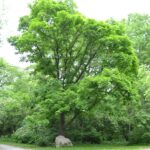
Tree Kalopanax septemlobus [Castor Aralia] No disease or insect problems. Stout prickles could cause injury. Slight weediness via the seeds. Not common in commerce.
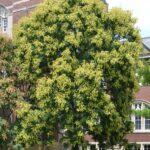
Tree Koelreuteria paniculata [Goldenraintree] Colorful small tree in bloom and interesting for its form. Tolerates heat, drought, wind, alkaline soils, and air pollution. Newly emerging leaves can be damaged by late spring freezes. Rather weak-wooded. Can be damaged or killed by –25 degrees F. Invasive in some parts of the country.
Shrub Kolkwitzia amabilis [Beautybush] The Beautybush is an arching, deciduous shrub known for its spectacular pink flower show in the spring. However, it can be too coarse for the landscape when not in bloom. Dead wood should be removed and the plant should be pruned (even hard pruning to the ground) every few years to prevent the plant from becoming overgrown. Plants bloom on old wood so hard prunings will result in loss of bloom, but will improve the…