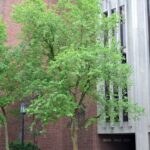
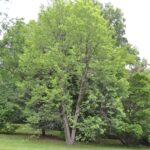
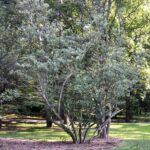
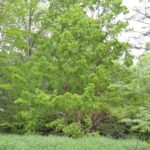
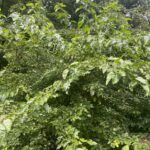
Shrub InvasiveThis plant is considered invasive Lonicera tatarica [Tatarian Honeysuckle] Widely adapted to different soils and exposures, but avoid wet soils. Pruning of dead twigs is required periodically. Renewal pruning to a low framework every 5-8 years is helpful to maintain nice form and vigor. Russian aphid, which causes witches brooming, is a significant pest. Lonicera tatarica readily invades open woodlands, old fields, and other disturbed sites. It can spread rapidly due to birds and mammals dispersing the seeds and can form an extremely dense…
Shrub InvasiveThis plant is considered invasive Lonicera tatarica 'Zabelii' [Zabelii Tatarian Honeysuckle] Widely adapted to different soils and exposures, but avoid wet soils. Pruning of dead twigs is required periodically. Renewal pruning to a low framework every 5-8 years is helpful to maintain nice form and vigor. Russian aphid, which causes witches brooming, is a significant pest. Lonicera tatarica readily invades open woodlands, old fields, and other disturbed sites. It can spread rapidly due to birds and mammals dispersing the seeds and can form an extremely dense…
Tree Indiana Native Maclura pomifera [Osage-orange] Withstands wind and dry conditions well. Used by farmers as a hedgerow for livestock fencing because of its thorniness. Highly deer resistant. Fruits are said to be an insect and rodent repellent. Extremely decay resistant wood, containing 1% by weight 2,3,4,5-tetrahydroxystilbene (a fungitoxic compound). Large fruits create litter problem; select staminate trees to avoid fruit (unless you believe the fruits are of interest). Due to invasive root system, do not plant near sewer or drainage…
Tree Indiana Native Magnolia acuminata [Cucumbertree Magnolia] This tree gets it name from the cucumber-looking fruits it bears in the fall. Full sun is best, although it has tolerance for partial shade. Because the roots are thick and fleshy and grow downward more than out, it can be moderately difficult to transplant. Generally trouble-free, but scale can be a problem on occasion. This species may not be ideal for street tree plantings because of a tendency to suffer ice damage.
Shrub/Tree Magnolia virginiana [Sweetbay Magnolia] Nice flower fragrance, but never overwhelming. Does well in wet soils, unlike other magnolias. Requires acid soil, some moisture, and tolerates some shade. Chlorosis can sometimes be a problem, especially prevalent on alkaline soils.
Liana (Climbing Vine) Mandevilla × amoena [Mandevilla Vine] The Mandevilla Vine is a vigorous plant that climbs by twining. Can be grown in containers and as a houseplant. 'Alice du Pont' is more common in commerce than the species type.
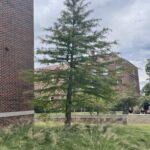
Tree Metasequoia glyptostroboides [Dawn Redwood] More tolerant of different sites than Taxodium distichum (Common Baldcypress). Prefers moist sites and can grow in water. Japanese beetles will feed on foliage. Does not like chalky soils with high pH.
Tree Metasequoia glyptostroboides 'Sheridan Spire' [Sheridan Spire Dawn Redwood] 'Sheridan Spire' is more narrow and upright than the straight species. Metasequoia glyptostroboides is more tolerant of different sites than Taxodium distichum (Common Baldcypress). Prefers moist sites and can grow in water. Japanese beetles will feed on foliage. Does not like chalky soils with high pH.
Tree InvasiveThis plant is considered invasive Morus alba [White Mulberry] It will grow in nearly any situation. There are occasional problems with cankers, mites, and bacterial blights. Morus alba is very similar to the native red mulberry (Morus rubra), but may be distinguished by the leaves. Its leaves have glossy surfaces whereas the leaves of Morus rubra do not. Morus alba is found throughout the United States, where it invades old fields, urban lots, roadsides, forest edges, and other disturbed areas. It poses an ecological…
Tree Indiana Native Morus rubra [Red Mulberry] The Red Mulberry is fairly adaptable and can sometimes be a prolific self-seeder. To prevent bleeding, it should be pruned in late fall or winter. Although somewhat more sensitive to soil requirements, Morus rubra is considered to be a better choice than the related Morus alba (White Mulberry), which has a much more invasive character. Morus rubra is dioecious, so male and female flowers are borne on separate trees. Female trees, if fertilized, bear edible…