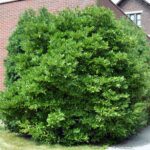
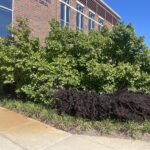
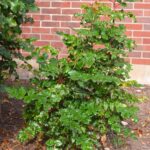
Shrub Juniperus squamata 'Variegata' [Variegated Singleseed Juniper] 'Variegata' is a low-growing and spreading shrub with creamy white new shoots. This plant gained its common name from the single seed borne by each cone. Widely adapted to soils and climates. Does well in alkaline soils, but not wet soils. Susceptible to bagworms.
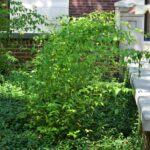
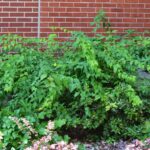
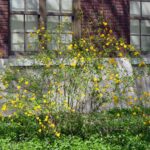
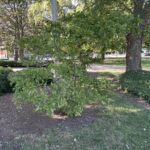
Shrub Kerria japonica [Japanese Kerria] Fairly adaptable to soils and microclimates, including considerable shade; best out of extremely sunny exposures. Occasionally winter-injured in the north, but otherwise relatively trouble-free. Suckers and spreads slowly. Needs occasional pruning to remove dead branches and renewal pruning to maintain form.
Shrub Kerria japonica 'Golden Guinea' [Golden Guinea Japanese Kerria] 'Golden Guinea' has crisply textured leaves and bears an abundance of large yellow flowers. Fairly adaptable to soils and microclimates, including considerable shade; best out of extremely sunny exposures. Occasionally winter-injured in the north, but otherwise relatively trouble-free. Suckers and spreads slowly. Needs occasional pruning to remove dead branches and renewal pruning to maintain form.
Shrub Kerria japonica 'Pleniflora' [Double Flowered Japanese Kerria] 'Pleniflora' is a very popular cultivar of Japanese Kerria with its long lasting, bright yellow, double flowers that are nearly spherical, reminiscent of "pom-poms". Fairly adaptable to soils and microclimates, including considerable shade; best out of extremely sunny exposures. Occasionally winter-injured in the north, but otherwise relatively trouble-free. Suckers and spreads slowly. Needs occasional pruning to remove dead branches and renewal pruning to maintain form.
Shrub/Tree Magnolia × 'Jane' [Jane Magnolia] The Jane Magnolia is a shrubby magnolia that produces beautiful, large deep pink-purple flowers 2-4 weeks later than Magnolia stellata and M. x soulangeana, reducing the rick of frost damage. Flowers again sporadically throughout the summer. Part of the Little Girls Hybrid Series.
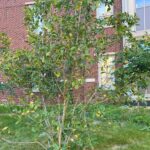
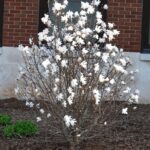
Shrub/Tree Magnolia stellata [Star Magnolia] Handsome specimen at all seasons. Needs at least some protection from strong wind in Zones 4 and 5. Somewhat prone to breakage in severe ice storms. Early blooming flowers often destroyed by late spring frosts.
Shrub/Tree Magnolia stellata 'Centennial' [Centennial Star Magnolia] 'Centennial' is an excellent, vigorous Magnolia stellata cultivar with large (5.5" across), pink-blushed white flowers with numerous tepals. This plant was released by the Arnold Arboretum of Harvard University in 1972 to commemorate its 100th anniversary. Handsome specimen at all seasons. Needs at least some protection from strong wind in Zones 4 and 5. Somewhat prone to breakage in severe ice storms. Early blooming flowers often destroyed by late spring frosts.
Tree Magnolia stellata 'Royal Star' [Royal Star Magnolia] Magnolia stellata 'Royal Star' is a small flowering tree that has a more rounded habit than the straight M. stellata, with its flower buds pink that open to 12-18 white tepals. Flowers are fragrant and reach 3 to 4" in diameter. Flowers appear early spring, but can be damaged by spring frosts. Needs protection from strong winds, as it has been known to be weak-branched.
Shrub/Tree Magnolia × 'Susan' [Susan Magnolia] The Susan Magnolia is a shrubby magnolia that produces long, slender, reddish purple buds openning to beautiful, large reddish purple flowers. 5" slightly twisted flowers are erect and have 6 tepals . Flowes later than Magnolia stellata in Spring, but can also flower sporadically throughout the Summer. Summer flowers are of lighter color due to the heat. Part of the Little Girls Hybrid Series.
Shrub Mahonia aquifolium [Oregon Grapeholly] Widely adapted to soil type and environment, except high pH soils that will cause chlorosis. Quite susceptible to winter-burn. Do not plant in sites exposed to strong winds or afternoon sun in winter. Can get leggy with age. Fruits are edible and can be used in jellies.