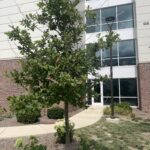
Tree Malus × 'Royalty' [Royalty Flowering Crabapple] The Flowering Crabapple is a popular small ornamental tree with an extremely showy flower display in the spring. 'Royalty' is an annual bloomer that has deep reddish-pink flowers and handsome dark purple foliage. This cultivar is highly susceptible to apple scab and fireblight. Well-drained heavy loam soils and full sun promote best growth. May look ragged at the end of the summer.
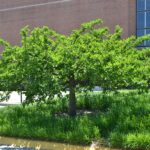
Tree Malus sargentii [Sargent Crabapple] The smallest of all Malus species, almost a shrub. Strongly horizontal branching. Tends to be apomictic (seeds develop without fertilization), so is usually very uniform from seed (i.e. clonal). Sometimes flowers and fruits in alternate years. Susceptible to apple scab disease. May require pruning of wayward and crossing branches to maintain a nice form.
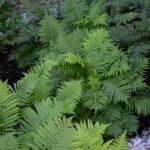
Fern Matteuccia struthiopteris subsp. pensylvanica [Ostrich Fern] The Ostritch fern is native to North America, Europe, and northern Asia. They usually stay around 2 to 3 feet tall, but could reach 6 feet under the correct conditions. The frons arise in mid-summer and persist through the winter.
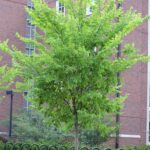
Tree Micromeles alnifolia [Korean Mountainash] Sorbus alnifolia is an attractive small, dense tree that produces beautiful clusters of white flowers in the spring. In the wild, this plant lives in cooler, mountain climates and is not well-adapted to USDA zone 8 and south. Intolerant of city conditions. Tends to flowers heavier every other year. Susceptible to fireblight and scab, but resistant to borers that frequently attack other Sorbus. Although this plant is commonly referred to as a "mountainash", it is…
Shrub Nandina domestica [Heavenly Bamboo] The beautiful red fruits are so prolific they can even bend down branches. Tolerates full sun or shade, even fruits well in shade. Prune by cutting canes back to ground. Develops iron chlorosis on Southwestern US due to high soil pH. 'Atropurpurea Nana' stays 2' high with reddish-green color throughout summer, turning dark red in winter.
Tree Nyssa sylvatica 'Hayman Red' [sold as Red Rage®] [Red Rage Black Gum] 'Haymanred', the broadly pyramidal cultivar of the Indiana native Black Gum, is know for its rich and vibrant fall color, lustrous dark green leaves and resistance to leaf spot. Selected from southern Indiana and introduced by Mike Hayman, it is one of the best cultivars of black gum. Can be difficult to transplant due to its taproot, use container-grown plants or plants dug with a soil ball. Can be used in areas with wet soils.
Tree Nyssa sylvatica 'Jolly' [Jolly Blackgum] This cultivar is known for its glossy green and white varigated leaves that don't scorch in full sun like other varieties.
Tree Nyssa sylvatica 'WFH1' [sold as Tupelo Tower™] [Tupelo Tower Black Gum] Tupelo Tower is one of the only upright, of columnar habit, unlike the straight species. Its tight habit, brilliant fall color, and urban tolerances make this cultivar highly saught after. Typically, a slightly acidic soil is needed for this species to perform well. Difficult to transplant, so best purchase as container grown. Wet soils tolerant.
Tree Indiana Native Nyssa sylvatica 'Wildfire' [Wildfire Blackgum] Especially useful in wet soils. One of the most beautiful trees, with habit comparable to Quercus palustris, but usually more irregular, and with a greater number of more slender main limbs. Silvery-grey, picturesque branching; strong horizontal accent. Difficult to transplant due to taproot; use container-grown plants when possible, or at least plants dug with a soil ball. Shelter from wind. In the North, select native northern stock as the species has a wide geographic range.…