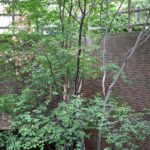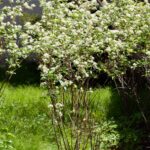
Shrub/Tree Amelanchier × grandiflora [Apple Serviceberry] The Apple Serviceberry is an attractive plant with multi-seasonal interest and can be found in both small tree or large shrub form. If the tree form is desirable, make sure to remove the suckers that arise from the roots, or the specimen will become shrubby. This is less of a problem for this hybrid species than its parents, Amelanchier arborea and A. laevis. The attractive white clusters of flowers give rise to sweet purple-black berries…
Tree Amelanchier × grandiflora 'Autumn Brilliance' [sold as Autumn Brilliance®] [Autumn Brilliance Apple Serviceberry] A. x grandiflora 'Autumn Brilliance is a vigorous selection with impressive blooms and bright red fall colors. It is resistant to leaf spot. The berries are frequently used to make jams, jellies, and pies. This selection can be found in both single and multi-trunk forms.
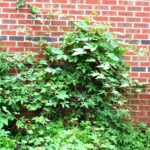
Liana (Climbing Vine) InvasiveThis plant is considered invasive Ampelopsis glandulosa var. heterophylla [Porcelain Ampelopsis] Best fruiting in full sun. Restricting root growth can enhance fruit production. Japanese beetles love them. Can be invasive. Rampant growth.
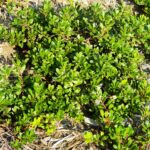
Shrub Indiana Native Arctostaphylos uva-ursi [Bearberry] Hard to establish, can develop winter burn from sun and wind when cold. Does not like excessive summer heat. Can develop foliar diseases (leaf spot) when stressed. Leaves are used to make a tea in some parts of Russia, where it is known as Kutai and Caucasian Tea. The dried leaves have been used to treat diseases of the bladder and kidney, and inflammatory diseases.
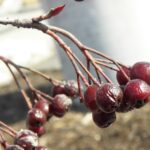
Shrub Indiana Native Aronia arbutifolia [Red Chokeberry] Red Chokeberry is often a multi-stem shrub that's native to Indiana as well as Eastern North America to Minnesota and south as far as Texas. This shrub bears white to slightly pinkish flowers with prominent anthers that gives it a unique look. Red berries form in September to often December. Best grown in mass plantings or for a naturalizing species in the landscape. Though the berries are bitter to taste, they are often used in…
Shrub Aronia arbutifolia 'Brilliantissima' [Brilliant Red Chokeberry] The Brilliant Red Chokeberry has dark green leaves that turn a stunning deep red in the fall. 'Brilliant' produces larger and more abundant flowers and a greater number of red berries than the species type. Because birds find the fruits unappealing, the berries are allowed to persist well into the winter months. This plant tends to sucker and create colonies.
Shrub Aronia arbutifolia 'Erecta' [Erecta Red Chokeberry] 'Erecta' has a more upright form than the species and does not bear as colorful of fruit
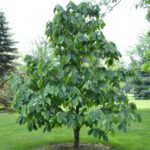
Tree Indiana Native Asimina triloba [Common Pawpaw] Needs filtered or full shade in its first few years, then tolerates full sun. Good specimen tree in a shady landscape. Fruits resemble a short, fat banana, at first green then turning yellowish then brown as they ripen in the fall, and taste like a combination between a banana and mango. Suckers rapidly.
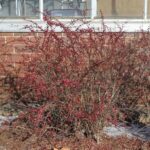
Shrub InvasiveThis plant is considered invasive Berberis thunbergii [Japanese Barberry] An adaptable plant that does well in an urban environment. Can be coppiced, with the resulting new growth developing better summer color. Can be pruned to ground every 5 to 7 years. Relatively trouble-free. Berberis thunbergii invades a variety of habitats from shaded woodlands to open fields and wetlands. Berberis thunbergii is rapidly spread by birds that eat the berries thus dispersing the seeds.
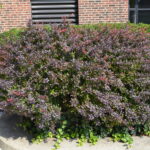
Shrub InvasiveThis plant is considered invasive Berberis thunbergii var. atropurpurea [Purple Japanese Barberry] This variety has purple to red summer foliage, turning a rich red to red-violet in the fall. It is an adaptable plant that does well in an urban environment. Place in a high light location for best foliage coloration. Can be coppiced, with the resulting new growth developing better summer color. Can be pruned to ground every 5 to 7 years. Relatively trouble-free.