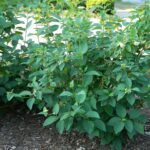
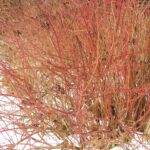
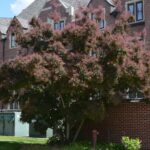
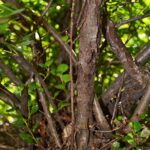
Shrub Cornus sericea 'Flaviramea' [Yellow Twig Redosier Dogwood] 'Flaviramea' has yellow twigs that are especially prominent in winter. High susceptibility to canker. Grows well in a variety of situations, including wet soil. Easy to transplant. Relatively trouble-free. A three-year pruning cycle improves form, vigor, and winter stem color effect. Cutting all stems 6-12" from ground in late winter has similar effect. Best in mass plantings. Excellent for winter color. Leaf blights and twig cankers can be problematic.
Shrub Cornus sericea 'Kelseyi' [Dwarf Redosier Dogwood] 'Kelseyi' is a dense dwarf shrub that has red twigs all year round. The stem color is not as strong as that of the species type, but is still attractive. Grows well in a variety of situations, including wet soil. Easy to transplant. Relatively trouble-free. A three-year pruning cycle improves form, vigor, and winter stem color effect. Cutting all stems 6" from ground in late winter has similar effect. Best in mass plantings. Good for…
Tree Cornus × 'Rutgan' [sold as Stellar Pink®] [Stellar Pink Dogwood] Stellar Pink is a hybrid between Cornus florida x Cornus kousa, released by Rutgers University. It is a small deciduous tree with a dense, upright habit, noted for having good resistance to anthracnose and dogwood borer.
Shrub Corylus avellana [European Filbert] Corylus avellana is a tough, usually a large, suckering, thicket-forming shrub, but it can also be grown as a small tree, if the suckers are controlled. The nut is edible and Corylus avellana is frequently grown for production in Europe.
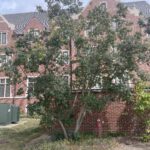
Tree Corylus colurna [Turkish Filbert] Horizontal branch structure (with lower branches often touching the ground), strong central leader, and bark give good winter character. Does great in hot summers and cold winters, very adaptable. Quite drought tolerant after establishment, leaves stay green when maples scorch. Needs supplemental water immediately after transplanting and until established. Otherwise drought tolerant. Nuts are edible and can be roasted.
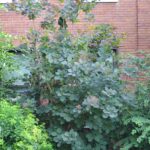
Shrub/Tree Cotinus coggygria [Common Smokebush] Usually dioecious, so heavy-fruiting clonal material should be used when possible. Can be pruned to low framework each year to promote plant coloration which occurs best on vigorous stems. Misty fruiting panicles give the species its name. The fine-textured hairs on the fruit pedicels and peduncles change colors, being best when tinted smoky pink.
Shrub/Tree Cotinus coggygria 'Purpureus' [Purpureus Smokebush] 'Purpureus' is known for its purple-pink fruiting panicles. Can be pruned to low framework each year to promote plant coloration which occurs best on vigorous stems. Misty fruiting panicles give the species its name. The fine-textured hairs on the fruit pedicels and peduncles change colors, being best when tinted smoky purple to pink.
Shrub/Tree Cotinus obovatus [American Smoketree] Cotinus obovatus can be a large shrub or small tree and is most noted for its extraordinary fall color and fluffy, smoke-like fruiting panicles. It is a tough plant, adapted to poor, rocky, limestone soils.
Shrub/Tree Cotinus × 'Grace' [Grace Smokebush] 'Grace' has become a popular cultivar with its purple emerging leaves and giant panicles of smokey, pink flowers. The "flowers" are actually misty fruiting panicles that give the species its name. The fine-textured hairs on the fruit pedicels and peduncles change colors, being best when tinted smoky pink. Can be pruned to low framework each year to promote plant coloration which occurs best on vigorous stems.
Shrub Cotoneaster apiculatus [Cranberry Cotoneaster] An excellent groundcover for full sun in almost any soil, except that weeds encroach easily for the first few years. Use effective mulch. Subject to damage from fireblight occasionally, and from mites, especially in dry situations. Not tolerant of wet sites. Collects litter and leaves (in the fall), which are difficult to rake out.