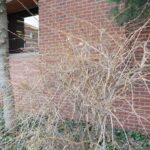
Shrub Lonicera × purpusii 'Winter Beauty' [Purple-Stem Winter Honeysuckle] 'Winter Beauty' is a dense, rounded semi-evergreen shrub that has red-violet stems and produces an abundance of fragrant white flowers in late winter and early spring. Rejuvenate periodically by cutting back 6-12" from the ground.
Shrub InvasiveThis plant is considered invasive Lonicera tatarica 'Zabelii' [Zabelii Tatarian Honeysuckle] Widely adapted to different soils and exposures, but avoid wet soils. Pruning of dead twigs is required periodically. Renewal pruning to a low framework every 5-8 years is helpful to maintain nice form and vigor. Russian aphid, which causes witches brooming, is a significant pest. Lonicera tatarica readily invades open woodlands, old fields, and other disturbed sites. It can spread rapidly due to birds and mammals dispersing the seeds and can form an extremely dense…
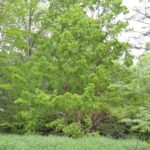
Tree Metasequoia glyptostroboides [Dawn Redwood] More tolerant of different sites than Taxodium distichum (Common Baldcypress). Prefers moist sites and can grow in water. Japanese beetles will feed on foliage. Does not like chalky soils with high pH.
Tree Metasequoia glyptostroboides 'Sheridan Spire' [Sheridan Spire Dawn Redwood] 'Sheridan Spire' is more narrow and upright than the straight species. Metasequoia glyptostroboides is more tolerant of different sites than Taxodium distichum (Common Baldcypress). Prefers moist sites and can grow in water. Japanese beetles will feed on foliage. Does not like chalky soils with high pH.
Herbaceous Panicum virgatum 'Thundercloud' [Thundercloud Switch Grass] This tall hedge grass can grow up to 8 feet tall, making it a great option to buffer views or frame spaces. Open panicles frame the crown creating a soft fluffy top that contrast the dark green switchgrass blades.
Shrub Physocarpus opulifolius 'SMNPOTW' [sold as Tiny Wine®] [Tiny Wine Ninebark] Tiny Wine Ninebark is noted for its features as it is interesting season round. The exfoliating bark on mature wood reveals red-brown inner bark, this is how the common name Ninebark was chosen as the color is ever changing.
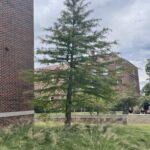
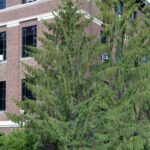
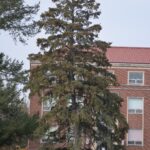
Tree Picea abies [Norway Spruce] Slight mite susceptibility in hot, dry sites. Some susceptibility to borers. May become thin, open, and have a less attractive habit at maturity.
Tree Picea glauca [White Spruce] Best in full sun, but tolerates some shade. Withstands heat, cold, drought, wind, and crowding. Often found at the arctic tree line. Slight susceptibility to trunk and root rots, bagworms, sawflies, and mites. Except for its use in the far North, other evergreens have better overall aesthetics for Midwestern and Eastern states.
Shrub/Tree Picea glauca var. conica [Dwarf Alberta Spruce] This commonly available dwarf variety has a very dense, conical habit. Best in full sun, but tolerates some shade. Withstands heat, cold, drought, wind, and crowding. Slight susceptibility to trunk and root rots, bagworms, sawflies, and mites. Except for its use in the far North, other evergreens have better overall aesthetics for Midwestern and Eastern states.
Tree Picea glauca var. densata [Black Hills Spruce] Widely considered a superior form, this variety is denser and more compact with brighter foliage, when compared to the straight species . Best in full sun, but tolerates some shade. Withstands heat, cold, drought, wind, and crowding. Slight susceptibility to trunk and root rots, bagworms, sawflies, and mites.