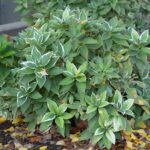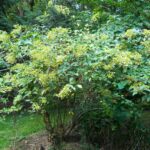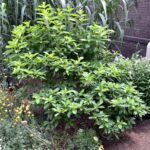
Shrub Purdue Plant Doctor Available Hydrangea macrophylla 'Robert' [sold as Let's Dance Moonlight™] [Let's Dance Moonlight Bigleaf Hydrangea] Let's Dance Moonlight Bigleaf Hydrangea is a mophead cultivar that reblooms throughout the late summer months (July-September). Slightly more compact than the straight species, Let's Dance Moonlight cultivar typically grows 2 to 3' in height and in width. Like most of hydrangeas, flower color depends on the acidity of the soil (blue for more acidic and pink for more basic soils). Best use of this shrub would be in mass plantings. Purdue Plant Doctor Available
Shrub Audio Recording AvailablePurdue Plant Doctor Available Hydrangea paniculata [Panicle Hydrangea] Very hardy and adaptable plant, difficult to kill. So coarse, the straight species does not always combine well in the landscape. Remove grown flowers late in fall as they are not attractive. Can become straggly and unkempt with age. Audio Recording AvailablePurdue Plant Doctor Available
Shrub Purdue Plant Doctor Available Hydrangea paniculata 'Bombshell ' [Bombshell Panicle Hydragea] Purdue Plant Doctor Available
Shrub Purdue Plant Doctor Available Hydrangea paniculata 'Jane' [sold as Little Lime®] [Little Lime Hydrangea] Purdue Plant Doctor Available
Shrub Audio Recording AvailablePurdue Plant Doctor Available Hydrangea paniculata 'Limelight' [sold as Limelight®] [Limelight Panicle Hydrangea] 'Limelight' has large, dense, upright flower panicles that emerge white, change to lime-green, then rosey pink, ultimately becoming beige at the very end. Very hardy and adaptable plant, difficult to kill. Audio Recording AvailablePurdue Plant Doctor Available
Shrub Purdue Plant Doctor Available Hydrangea paniculata 'Little Quick Fire' [Little Quick Fire Panicle Hydrangea] Purdue Plant Doctor Available
Shrub Audio Recording AvailablePurdue Plant Doctor Available Hydrangea paniculata 'Tardiva' [Tardiva Panicle Hydrangea] 'Tardiva' has a dense habit and flowers later, in September. Very hardy and adaptable plant, difficult to kill. Remove grown flowers late in fall as they are not attractive. Audio Recording AvailablePurdue Plant Doctor Available
Shrub Audio Recording AvailablePurdue Plant Doctor Available Hydrangea quercifolia [Oakleaf Hydrangea] A unique plant with attractive flower panicles and large, coarse, handsome foliage. Tops (including flower buds formed in fall) can die back when winter temperatures go much below – 20 degrees F (often in Zone 6b and colder). Flowers form on previous season's growth. Thus, no flowers will appear in the years when the tops are killed. May be best used for foliage effect in cold areas. Not very drought tolerant. Spreads by stolons forming… Audio Recording AvailablePurdue Plant Doctor Available
Shrub Purdue Plant Doctor Available Hydrangea quercifolia 'Alice' [Alice Oakleaf Hydrangea] Alice is an upright, stoloniferous shrub with a broad, rounded habit which grows 5-8' tall and similar in witdth. In optimum growing conditions, Alice can reach heights of 12' tall. The flowers of this shrub are the highlight of any landscape with creamy-white, feathery panicles that change to a rosy-pink color with age. Large, coarse green leaves change to a burgundy-red in the fall. Exfoliating stems add texture and color during the winter months. Tops… Purdue Plant Doctor Available
Shrub Audio Recording AvailablePurdue Plant Doctor Available Hydrangea quercifolia 'Flemygea' [sold as Snow Queen™] [Snow Queen Oakleaf Hydrangea] A unique plant with attractive flower panicles and large, coarse handsome foliage. 'Flemygea' is known for its larger and more numerous showy, sterile flowers in each panicle. This cultivar also has stronger flower stems that can withstand a heavy rain better than many Hydrangea quercifolia variants. Tops (including flower buds formed in fall) can die back when winter temperatures go much below – 20 degrees F (often in Zone 6b and colder). Flowers form on… Audio Recording AvailablePurdue Plant Doctor Available