Shrub Rosa × 'Radwhite' [sold as White Knock Out®] [White Knock Out Rose] The White Knock Out Rose is a compact shrub with matte green foliage, making the creamy white flowers stand out against the dark leaves.
Shrub/Tree Salix caprea [Pussy Willow] Salix caprea is one of several species commonly referred to as "Pussy Willows". The common name is derived from the silky soft male catkins (species is dioecious). Tolerates heavy pruning and can be cut to the ground every 3-5 years to maintain size. The wood of this plant is weak and easily damaged. This species is susceptible to many pests and diseases.
Shrub/Tree Indiana Native Salix humilis [Prairie Willow] Prairie Willow is more drought tolerant than other willows. Rabbits and deer eat the twigs. The nectar is used by bees to provide high quality honey.
Tree Sophora japonica 'Regent' [Regent Japanese Pagoda Tree] 'Regent' is a cultivar with a fast growth rate, more mass to its oval-round crown, and has deep green glossy leaves. although, It can take up several years before it flowers for the first time.
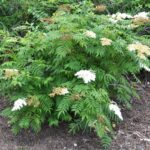
Shrub Sorbaria sorbifolia [Ural Falsespirea] Coarse texture and unusual spirea-like flowers give this plant unique summer interest. Best in large-scale situations. Spreads vigorously by suckering if not contained. Intensive root pruning can be used to control spread. Does not do the best in dry soils but does tolerate them. Does poorly in heavy wind. Flowers turn brown with senescence and esthetic is slightly improved by their removal. To some, a bit too coarse in winter habit.
Tree Sorbus intermedia [Mountainash] Structural pruning is important for this species, as it has weak crotch angles. Prune so that the trunk and branches cannot rub against each other. This tree does not tolerate competition well and should be mulched to the dripline.
Shrub Spiraea × vanhouttei [Vanhoutte Spirea] The Vanhoutte Spirea is a tough shrub with a beautiful, fountain-like habit. In late spring, the long, gracefully arching branches are covered in numerous white flowers. Moderately drought tolerant. May be affected by leaf spot.
Tree Stewartia pseudocamellia [Japanese Stewartia] In the wild, this specimen can grow up to 60' high, much larger than the mature landscape tree which ranges from 20-40' high. The outstanding, multi-colored bark is rich and flaking, ranging from soft grays and browns to orangish brown. There are no serious pests or diseases for this specimen.
Tree Styphnolobium japonicum [Japanese Pagodatree] A widely adapted tree with good drought and pollution tolerance, and foliage texture comparable to Gleditsia, but a smaller tree and with more seasonal interest. Relatively trouble-free except for fungi that live in weaker twigs that cause twig blight and canker. Fungi invade most readily those twigs killed by cold or self-pruning. Seeds are poisonous. Difficult to train a central leader. More cold sensitive when young.