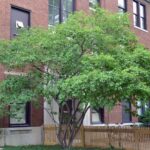
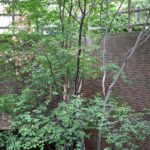
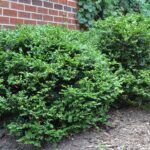
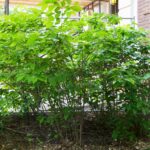
Tree Indiana Native Audio Recording AvailableID That Tree Video AvailablePurdue Plant Doctor Available Amelanchier laevis [Allegheny Serviceberry] An excellent small tree for naturalizing and for very early, but short-lived, bloom. Fruits are edible and a prime source of food for birds. Can produce fruit by apomixis. Subject to the troubles of Rosaceous plants in general, including fire-blight and mites, which can be controlled, usually quite easily. Indiana NativeAudio Recording AvailableID That Tree Video AvailablePurdue Plant Doctor Available
Tree Purdue Plant Doctor Available Amelanchier laevis 'JFS-Arb' [sold as Spring Flurry®] [Spring Flurry Allegheny Serviceberry] An excellent tree for naturalizing and for very early, but short-lived, bloom, the Spring Flurry Allegheny Serviceberry has an upright form and grows larger than the species type, up to 35 feet tall. Fruits are edible and a prime source of food for birds. Subject to the troubles of Rosaceous plants in general, including fire-blight and mites, which can be controlled, usually quite easily. Purdue Plant Doctor Available
Shrub/Tree Audio Recording AvailablePurdue Plant Doctor Available Amelanchier × grandiflora [Apple Serviceberry] The Apple Serviceberry is an attractive plant with multi-seasonal interest and can be found in both small tree or large shrub form. If the tree form is desirable, make sure to remove the suckers that arise from the roots, or the specimen will become shrubby. This is less of a problem for this hybrid species than its parents, Amelanchier arborea and A. laevis. The attractive white clusters of flowers give rise to sweet purple-black berries… Audio Recording AvailablePurdue Plant Doctor Available
Tree Audio Recording AvailablePurdue Plant Doctor Available Amelanchier × grandiflora 'Autumn Brilliance' [sold as Autumn Brilliance®] [Autumn Brilliance Apple Serviceberry] A. x grandiflora 'Autumn Brilliance is a vigorous selection with impressive blooms and bright red fall colors. It is resistant to leaf spot. The berries are frequently used to make jams, jellies, and pies. This selection can be found in both single and multi-trunk forms. Audio Recording AvailablePurdue Plant Doctor Available
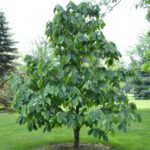
Tree Indiana Native Audio Recording AvailableID That Tree Video Available Asimina triloba [Common Pawpaw] Needs filtered or full shade in its first few years, then tolerates full sun. Good specimen tree in a shady landscape. Fruits resemble a short, fat banana, at first green then turning yellowish then brown as they ripen in the fall, and taste like a combination between a banana and mango. Suckers rapidly. Indiana NativeAudio Recording AvailableID That Tree Video Available
Fern Purdue Plant Doctor Available Athyrium niponicum var. pictum 'Ursala’s Red' [sold as Ursala's Red Japanese Painted Fern] [Ursala's Red Japanese Painted Lady Fern] Purdue Plant Doctor Available
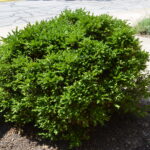
Shrub Purdue Plant Doctor Available Buxus 'Green Gem' [Green Gem Boxwood] This species is a hybrid of Buxus sinica and Buxus sempervirens and is described as a perfect round ball. Hardier than var. insularis 'Winter Beauty'. Requires little prunning and shearing. Avoid cultivating around plants because they have a shallow root. Roots appreciate a good mulch ( 1-2"). Thin plants and remove damaged branches annually to improve air circulation. Buxus X 'Green Gem' is best suited to a sheltered lacation which protects it in the winter… Purdue Plant Doctor Available
Shrub Audio Recording AvailablePurdue Plant Doctor Available Buxus × 'Green Velvet' [Green Velvet Boxwood] This species is a hybrid of Buxus sinica and Buxus sempervirens and is primarily used for smaller spaces. Audio Recording AvailablePurdue Plant Doctor Available
Shrub Audio Recording Available Calycanthus floridus [Common Sweetshrub] The Common Sweetshrub was one of the first native plants in the US used as an ornamental. Widely adapted to soil and sun or shade. Certain selections can permeate an area with fragrance. Can be forced for indoor fragrance. Not all plants have equally fragrant flowers; don't use seed propagated plants for that reason. Seeds are poisonous, causing convulsions, myocardial depression, and hypotension. Audio Recording Available
Herbaceous Audio Recording Available Carex pensylvanica [Pennsylvania Sedge] Sedge will self-seed in good conditions and is rhizomatous. Native to Eastern and Central North America, stretching from Quebec down to Mississippi. It has a creeping habit and will form colonies. Audio Recording Available