Rosa multiflora
Multiflora Rose
Other Common Names: Japanese Rose

 This plant is considered invasive.

 Genus:
 Plant Type:
 Deciduous / Evergreen:
 Flower Notes:
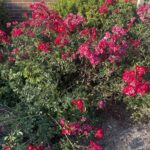
Abundant, showy, fragrant, and white to slightly pink, Flowers are .5" - 1.5" wide and form a panicle (a pyramidal, loosely branched flower cluster). Blooms mid-to-late spring.
 Foliage Notes:
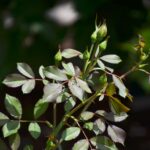
Alternate, pinnately compound with 5-11 small (0.5-1”) sharply-toothed oval leaflets, nearly smooth on the upper surface and paler with short hairs on the underside pair of fringed stipules (a leaf-like structure) at the base of each leaf.
 Fruit Notes:
Clusters of small (0.25” in diameter), hard, bright red fruits or rose hips develop in summer, become brownish-red at maturity and remain on the plant through winter. Birds and mammals disperse them.
 Ultimate Height:
10-15 feet
 Ultimate Spread:
9-13 feet
 Bloom Times:
 Fruiting Times:
 Range:
Eastern China, Korea, Japan
  Special Characteristics:

Additional Information

Highly invasive. Multiflora rose was imported from Eastern Asia in the late 1700s as an ornamental, in erosion control, and as a living fence. his bush forms dense strands that interfere with other woody species and replaces native plants on forest edges. In Indiana, it is illegal to move, plant, or distribute multiflora rose without a permit, according to DNR DEPP Admin code 312 IAC 18-3-13. It is designated a noxious weed in several states including Iowa, Ohio, New Jersey, Pennsylvania, and West Virginia. Tips on control from State of Indiana Cooperative Invasives Management: Like other invasive species, a combination of control tactics is necessary to manage multiflora rose. The most effective control is to prevent it from becoming established.  Plants should be removed as soon as possible when they are found.  Small plants and seedlings can be hand-pulled with protective gloves, especially when the soil is moist. However, root fragments left in the soil may resprout. Mechanical and chemical methods are currently the most widely used methods for managing multiflora rose. Application of systemic herbicides (e.g., glyphosate) on freshly cut stumps or to regrowth may be the most effective methods, especially if conducted late in the growing season. Foliar application of herbicide can also be effective, but care must be taken if there are desirable species in the area. Cutting without the use of herbicide can limit the spread but will not eradicate it. In this case, stems should be cut at least once per growing season as close to ground level as possible.

Other plants like this Rosa multiflora (Multiflora Rose)

The Purdue Arboretum is a collaboration between the Department of Horticulture and Landscape Architecture and Physical Facilities Grounds Department

Purdue Arboretum, 625 Agriculture Mall Dr, West Lafayette, IN, 47907
© 2026 Purdue UniversityAn equal access/equal opportunity universityCopyright ComplaintsMaintained by Purdue Arboretum Explorer
Contact Purdue Arboretum at arboretum@purdue.edu for accessibility issues with this page | Accessibility Resources | Contact Us