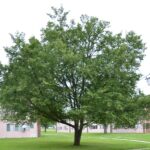
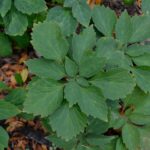
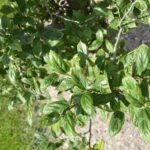
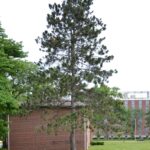
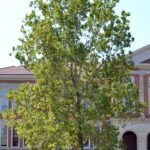
Tree Indiana Native Populus grandidentata [Bigtooth Aspen] This tree is very fast-growing with best development in moist, fertile soils but will grow on dry, sand or gravelly soils. It is very valuable for pulp wood. Often pyramidal in youth with a central leader, developing an oval, open, irregular crown at maturity.
Tree Indiana Native Populus tremuloides [Quaking Aspen] The common name of Populus tremuloides is derived from the tendency of the leaves to tremble (quake) in the wind, or even light breezes, due to flattened petioles. This is a fast-growing and short-lived species that regenerates from root suckers and can quickly recolonize disturbed sites. Generally, most of the specimens in a grove of P. tremuloides are clones, all originating from the same stem. This plant is dioecious, so groves are usually all male…
Tree Populus tremuloides 'NE Arb' [sold as Prairie Gold®] [Prairie Gold Quaking Aspen] Prairie Gold® Quaking Aspen is more tolerant to urban conditions including heat, drought, and humidity. The Aspen's name is derived from its golden yellow fall color. Native from Labrador to Alaska, south to Pennsylvania, Missouri, northern Mexico and lower California.
Tree Indiana Native Prunus serotina [Black Cherry] Probably the best native-American species of cherry for landscape use, but still useful only in a few situations, especially for naturalizing. A valuable timber tree, especially for furniture. Subject to several minor pests, none usually serious in naturalized situations. Wood is slightly brittle. Eastern tent caterpillar problematic is some years.
Tree Prunus serrulata 'Sekiyama' [Sekiyama Japanese Flowering Cherry] The Japanese Flowering Cherry prefers rich, moist, well-drained loams and full sun. It can tolerate part shade (at the expense of blooms), as well as heat, humidity, and even some drier soils (once it is established). This tree is susceptible to many pests, including leaf spot, powdery mildew, fireblight, Japanese beetles, aphids, scale, borers, leafhoppers, and caterpillars. 'Kwanzan', which is also known as 'Kanzan' or 'Sekiyama,' grows 30 to 40 feet high. This variant, sometimes…
Shrub/Tree Indiana Native Prunus virginiana [Common Chokecherry] The Common Chokecherry can be a suckering small tree or large shrub that produces fragrant white racemes followed by small, purple-black cherries. These fruits can be used for pies, jellies, and jams (do not eat fresh). Suckers must be immediately removed to control growth.
Tree Indiana Native Quercus bicolor [Swamp White Oak] The Swamp White Oak is a sturdy, long-lived tree that is generally tolerant to average conditions and even wet soil, but requires full sun and acidic soil.
Tree Indiana Native Quercus coccinea [Scarlet Oak] Excellent scarlet fall foliage, comparable if not often better than the Pin Oak. Does not suffer iron chlorosis as bad as Pin Oak, being more tolerant of alkaline soils. Some report difficulty in transplanting.
Tree Indiana Native Quercus ellipsoidalis [Northern Pin Oak] Quercus ellipsoidalis is very closely related to Q. palustris (Pin Oak), but is better suited for the Midwest. Very similar to the Pin Oak, the Northern Pin Oak is a handsome tree with distinctive and regular branching, spreading to horizontal to drooping, from top to bottom of the tree. This effect is partly lost when lower limbs must be removed for traffic underneath. While this species is still prone to chlorosis (yellowing of leaves) in…
Tree Indiana Native Quercus imbricaria [Shingle Oak] Somewhat tolerant of city conditions. Can be pruned into a hedge. Leaves persist into winter, after the normal leaf raking period, and then fall. Oak gall susceptible, but a minor problem.