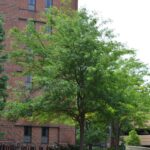
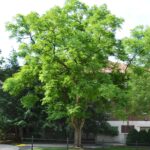
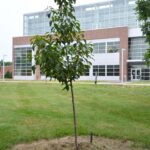
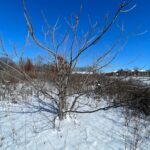
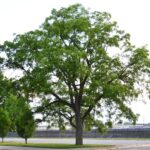
Tree Gleditsia triacanthos f. inermis [sold as Shademaster®] [Shademaster Thornless Honeylocust] The Shademaster Thornless Honeylocust is a popular cultivar that is nearly fruitless and has dark green, finely compound leaves on ascending branches that provide a pleasant, dappled shade in the summer. The thornless forma inermis is only sold in commerce, as the profuse thorns of the species type can be a liability. Mimosa webworm and locust mite are serious pests in the Midwest, and are becoming more serious (especially in areas tending toward monoculture). Can…
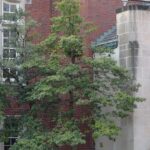
Tree Indiana Native Gymnocladus dioicus [Kentucky Coffeetree] Gymnocladus dioicus is a large deciduous tree with strong winter character from the branches and bark. Drops pods (female trees) and twigs, frequently causing litter problem, thus eliminating the straight species as a good street tree. Seeds were once used by US settlers as a coffee substitute, however pulp and seeds are toxic when not properly and completely roasted.
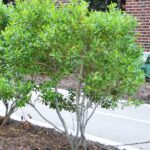
Tree Halesia carolina [Carolina Silverbell] This small tree is interesting in bloom and rather neutral otherwise, but relatively trouble free and useful in many situations as a neutral background plant, or for its flowers. Best grown as a single stem and allowed to branch low (20-30"). Does not transplant well (a particular problem with field-grown plants).
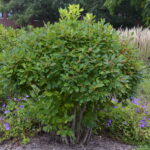
Shrub Hydrangea quercifolia 'Alison' [Alison Oakleaf Hydrangea] Alison Oakleaf Hydrangea has big panicle white flowers and offers season round interest with exfoliating bark. In fall the large green leaves turn a rich burgundy-red.
Shrub Indiana Native Ilex glabra [Inkberry] This species, like other hollies, is dioecious, so plant females for fruit and an occasional male for pollination. Withstands severe pruning. Winter desiccation injury to leaves occurs in exposed sites, with severe yellowing when temperatures drop below -20 degrees F. Avoid high pH soils.
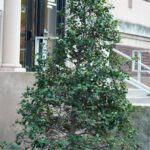
Tree Indiana Native Ilex opaca [American Holly] This species, like other hollies, is dioecious, so plant females for fruit and an occasional male for pollination. Winter desiccation injury can occur on leaves in exposed sites. Holly leaf miners are one of the major pest problems for Ilex opaca.
Tree Ilex opaca 'Old Heavy Berry' [Old Heavy Berry American Holly] 'Old Heavy Berry' is an excellent, vigorous female cultivar with good winter hardiness and an abundance of large, bright red fruits. This species, like other hollies, is dioecious, so plant females for fruit and an occasional male for pollination. Winter desiccation injury can occur on leaves in exposed sites. Holly leaf miners are one of the major pest problems for Ilex opaca.
Shrub Ilex verticillata 'Berry Heavy' [Berry Heavy Common Winterberry] Bright red fruits abundantly set; 6 to 8' high; 'Jim Dandy' is recommended as the male pollinator; Spring Meadow introduction.
Tree Indiana Native Juglans cinerea [Butternut] Juglans cinera is a large, rounded tree similar to, but overall smaller than the Black Walnut (Juglans nigra). It is not commonly grown for ornamental purposes. The nut, once one is able to crack the hard shell, is edible, sweet, oily, and buttery. Long tap root makes transplanting difficult. This species is valued for its wood and between overharvesting and losses from Butternut Canker (Sirococcus clavigignenti-juglandacearum), this species has become rare in its native habitat.
Tree Indiana Native Juglans nigra [Black Walnut] Nuts are a serious litter problem, staining sidewalks and driveways. Juglone (found in leaf litter and possibly roots) is toxic to many plants, like tomatoes, blackberries, red pines, and many others. Black Walnut wood is valuable and has a variety of commercial uses, especially for furniture.