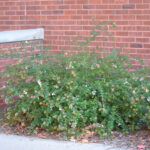
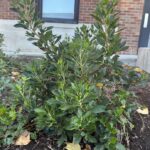
Shrub Abelia × grandiflora [Glossy Abelia] Glossy Abelia can develop chlorosis on high pH soils. Yearly pruning is required to remove deadwood and this plant may become leggy with age if not killed back in winter.
Shrub/Tree Indiana Native Aralia spinosa [Devil's Walkingstick] Slow growth rate, but fast on roots (forms a very coarse thicket). Sucker shoots can be a maintenance problem if tree form is desired. Sharp prickles also make maintenance difficult, and are a minor hazard to children. Otherwise, no serious problems with this plant. Very adaptable and easy to grow, tolerating most conditions except wet soil. Drought tolerant, and best in full sun. Excellent selection in a mass planting near buildings having poor soils.
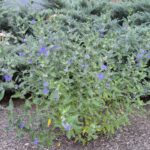
Shrub Caryopteris × clandonensis 'Longwood Blue' [Longwood Blue Bluebeard] This deciduous shrub is known for it's showy purple-blue flowers that bloom in spikey clusters, terminal and axillary clusters. Sources say that these clusters resemble blue smoke or mist resulting in its nickname Blue Mist.
Shrub Indiana Native Dasiphora fruticosa [Bush Cinquefoil] Extreme hardiness and long season of bloom make this a favorite in severe climates. Low stature and tolerance of poor, dry soils give it added usefulness in other areas also. Can develop a ragged, unkept habit over time. Remove 1/3 of canes each year (3-year pruning cycle), and consider renewal pruning to a very low framework every 3-5 years if needed.
Herbaceous Heliopsis helianthoides var. scabra 'Summer Sun' [sold as Summer Sun Rough Sunflower] [Summer Sun False Sunflower]
Tree Heptacodium miconioides [Seven-son Flower] The common name, Seven-Son Flower, is derived from the cluster of 7 small flowers contained within each whorl. The flowers are followed by very showy, reddish fruit structures that have the appearance of flowers. The tan, shredding bark is attractive and exfoliates in long strips to reveal a dark brown inner bark. This plant can be hard to find, both in the wild and in commerce. Needs pruning to maintain aesthetics.