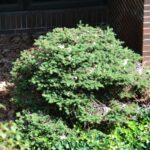
Shrub Audio Recording AvailablePurdue Plant Doctor Available Picea abies 'Nidiformis' [Bird's Nest Spruce] 'Nidiformis' is a commonly available dwarf cultivar that is flat, compact, and dense. Many times there is a depression or "nest" in the center of the plant. Slight mite susceptibility in hot, dry sites. Some susceptibility to borers. Audio Recording AvailablePurdue Plant Doctor Available
Shrub Audio Recording AvailablePurdue Plant Doctor Available Picea abies 'Pumila' [Dwarf Norway Spruce] 'Pumila' is a dwarf cultivar with a dense, flattend, globular form. The upper branches reach upward, while the lower branches spread outward. Slight mite susceptibility in hot, dry sites. Some susceptibility to borers. Audio Recording AvailablePurdue Plant Doctor Available
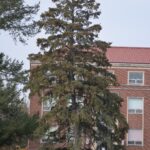
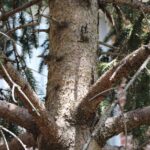
Tree Audio Recording AvailableID That Tree Video AvailablePurdue Plant Doctor Available Picea glauca [White Spruce] Best in full sun, but tolerates some shade. Withstands heat, cold, drought, wind, and crowding. Often found at the arctic tree line. Slight susceptibility to trunk and root rots, bagworms, sawflies, and mites. Except for its use in the far North, other evergreens have better overall aesthetics for Midwestern and Eastern states. Audio Recording AvailableID That Tree Video AvailablePurdue Plant Doctor Available
Shrub/Tree Audio Recording AvailablePurdue Plant Doctor Available Picea glauca var. conica [Dwarf Alberta Spruce] This commonly available dwarf variety has a very dense, conical habit. Best in full sun, but tolerates some shade. Withstands heat, cold, drought, wind, and crowding. Slight susceptibility to trunk and root rots, bagworms, sawflies, and mites. Except for its use in the far North, other evergreens have better overall aesthetics for Midwestern and Eastern states. Audio Recording AvailablePurdue Plant Doctor Available
Tree Purdue Plant Doctor Available Picea glauca var. densata [Black Hills Spruce] Widely considered a superior form, this variety is denser and more compact with brighter foliage, when compared to the straight species . Best in full sun, but tolerates some shade. Withstands heat, cold, drought, wind, and crowding. Slight susceptibility to trunk and root rots, bagworms, sawflies, and mites. Purdue Plant Doctor Available
Tree Audio Recording AvailablePurdue Plant Doctor Available Picea omorika [Serbian Spruce] One of the most beautiful and valued spruces for landscape planting. More useful than most as a screen where space is limited because of narrow form. Needles can brown in windy exposed sites in winter. Can get aphids, budworms, and borers, though these are not usually serious problems. Audio Recording AvailablePurdue Plant Doctor Available
Tree Purdue Plant Doctor Available Picea omorika 'Berliner’s Weeper' [Berliner's Weeper] Purdue Plant Doctor Available
Tree Purdue Plant Doctor Available Picea orientalis [Oriental Spruce] Generally considered a better choice for the landscape than P. abies (Norway Spruce) or P. glauca (White Spruce). Best in cooler climates; does not always tolerate southern heat and humidity well. In order to prevent desiccation and needle browning, protection from harsh winter winds is advisable for plants grown in colder climates. Purdue Plant Doctor Available