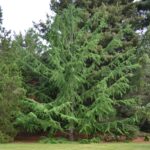
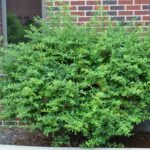
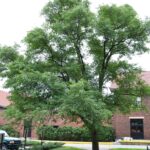
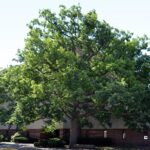
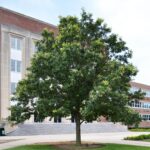
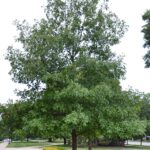
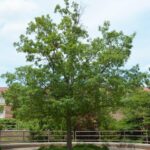
Tree Audio Recording AvailablePurdue Plant Doctor Available Styrax japonicus [Japanese Snowbell] Relatively trouble-free. Can be susceptible to Ambrosia beetle and canker. Partial shade best in Zones 7 and 8 due to heat intolerance. Audio Recording AvailablePurdue Plant Doctor Available
Shrub Audio Recording AvailablePurdue Plant Doctor Available Symphoricarpos × chenaultii [Chenault Coralberry] A more refined plant than the parent S. orbiculatus, perhaps more showy in flower and fruit and more useful in the shrub border. Useful as a bank cover or large scale groundcover. Transplants well. This plant has a beautiful fruit show and is shade tolerant, however, it is also a twiggy, "garbage can plant" (collects leaves and blowing debris); this quality (especially prominent in the fall and winter) limits its usability in the landscape. Audio Recording AvailablePurdue Plant Doctor Available
Shrub Audio Recording AvailablePurdue Plant Doctor Available Syringa × chinensis [Chinese Lilac] Can become ratty in appearance, and so should be pruned properly on 3 year cycle. Problems with aphids, powdery mildew, scales, and caterpillars, although powdery mildew is worst problem. Audio Recording AvailablePurdue Plant Doctor Available
Shrub Audio Recording AvailablePurdue Plant Doctor Available Syringa pubescens ssp. patula 'Miss Kim' [Miss Kim Manchurian Lilac] 'Miss Kim' is known for its prolific fragrant ice-blue flower panicles and more dense, compact habit. Powdery mildew resistant. Very low maintenance. Heat tolerant, so grows better in warmer climates than other lilacs. Also known as Syringa patula 'Miss Kim'. Audio Recording AvailablePurdue Plant Doctor Available
Shrub Audio Recording AvailablePurdue Plant Doctor Available Syringa vulgaris [Common Lilac] A difficult species to use in a functional way. Best for seasonal color and fragrance in the border or as an occasional specimen. Deadheading can promote flowering and prevent alternate bearing. Will get leggy without pruning (prune on a 3-year cycle). Powdery mildew is an increasingly serious problem the further south this is planted in its hardiness zone. Grows better in colder climates. Audio Recording AvailablePurdue Plant Doctor Available
Tree Indiana Native Audio Recording AvailableID That Tree Video AvailablePurdue Plant Doctor Available Thuja occidentalis [Eastern Arborvitae] One of the best plants for screening in moist, well-aerated soils. Bagworms can be a problem. Subject to several other insect pests, all of which usually can be controlled with timely spraying. Deer may feed on foliage. Winter color can be poor. Indiana NativeAudio Recording AvailableID That Tree Video AvailablePurdue Plant Doctor Available
Shrub/Tree Purdue Plant Doctor Available Thuja occidentalis 'Degroot's Spire' [Degroot's Spire Arborvitae] Purdue Plant Doctor Available
Tree Purdue Plant Doctor Available Thuja plicata 'Elegantissima' [Elegant Giant Arborvitae] One of the best plants for screening when grown in wet, but not saturated soils. An important timber tree in the western US. Subject to several pests (especially bagworms), all of which usually can be controlled with timely spraying. Purdue Plant Doctor Available
Tree Audio Recording AvailablePurdue Plant Doctor Available Tilia americana 'Redmond' [Redmond American Linden] Very adaptable, even in alkaline soil, but does not tolerate much air pollution. Too big for most urban landscapes. Japanese beetles like feeding on it. Audio Recording AvailablePurdue Plant Doctor Available
Tree Audio Recording AvailablePurdue Plant Doctor Available Tilia cordata 'Greenspire' [sold as Greenspire®] [Greenspire Littleleaf Linden] Pollution tolerant and adaptable to city conditions. A great choice as a street or shade tree with its dense form and strong central leader. Can have issues with Japanese beetles in mid-summer. Audio Recording AvailablePurdue Plant Doctor Available