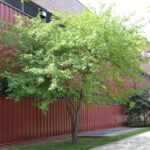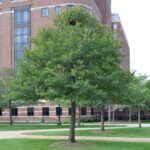
Tree Indiana Native Audio Recording AvailableID That Tree Video AvailablePurdue Plant Doctor Available Quercus palustris [Pin Oak] Handsome tree, distinctive for its regular branching, spreading to horizontal to pendulous, from top to bottom of the tree. This effect is partly lost when lower limbs must be removed for traffic underneath. Requires an acidic soil and is subject to severe iron chlorosis on calcareous soils. This can be corrected but it means additional maintenance. Indiana NativeAudio Recording AvailableID That Tree Video AvailablePurdue Plant Doctor Available
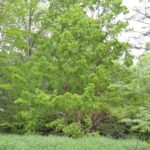
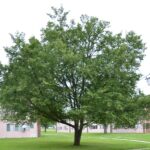
Tree Indiana Native Audio Recording AvailableID That Tree Video AvailablePurdue Plant Doctor Available Quercus rubra [Northern Red Oak] One of the best and most reliable of oaks as a shade or street tree. More vigorous and fast-growing than most oaks. Good street tree since it performs reasonably well in small soil volumes (although it tends to branch close to ground). Oak wilt disease has been troublesome in certain areas of the Midwest. Hybridizes easily with other oaks (be careful of source). Indiana NativeAudio Recording AvailableID That Tree Video AvailablePurdue Plant Doctor Available
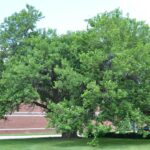
Tree Indiana Native Audio Recording AvailableID That Tree Video AvailablePurdue Plant Doctor Available Quercus shumardii [Shumard Oak] The Shumard Oak is a handsome tree that is drought and air pollution tolerant, and but can also be used in rain gardens. Transplanting and establishment can be difficult. Indiana NativeAudio Recording AvailableID That Tree Video AvailablePurdue Plant Doctor Available
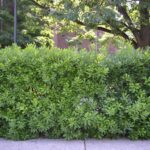
Tree Audio Recording AvailablePurdue Plant Doctor Available Quercus × warei 'Long' [sold as Regal Prince®] [Regal Prince Oak] The Regal Prince Oak is notable for its resistance to powdery mildew and borers, strong vertical, columnar form, and tolerance to wind and ice. Holds its dense, fastigiate form into old age. Audio Recording AvailablePurdue Plant Doctor Available
Shrub/Tree InvasiveThis plant is considered invasive Audio Recording AvailableID That Tree Video AvailablePurdue Plant Doctor Available Rhamnus cathartica [Common Buckthorn] Tolerates most sites. Dioecious. Very invasive, by the seeds that birds love to eat; probably best to refrain from planting this species in the landscape. Susceptible to rusts (Puccinia coronata), that also attacks oats (in oat growing areas, buckthorn eradication is recommended). The bark, leaves, and fruit were once used in purgatives, thus one of this plant's common names, "Purging Buckthorn". Audio Recording AvailableID That Tree Video AvailablePurdue Plant Doctor Available
Shrub Audio Recording AvailablePurdue Plant Doctor Available Rhododendron maximum 'Roseum' [Roseum Rosebay Rhododendron] 'Roseum' requires wind and shade protection, although it is a vigorous grower. Susceptible to a large number of pests and diseases, which can largely be prevented by good cultural practices. Audio Recording AvailablePurdue Plant Doctor Available
Shrub Audio Recording AvailablePurdue Plant Doctor Available Rhododendron × 'P.J.M.' (P.J.M. Hybrid Group) [P.J.M. Rhododendron] One of the most cold tolerant flower buds of the evergreen rhododendrons. Flowers can become a dirty looking lavender soon after opening. Quite variable in form and flower color. Avoid harsh, dry, windswept sites. Susceptible to a large number of pests and diseases, which can largely be prevented by good cultural practices. Audio Recording AvailablePurdue Plant Doctor Available
Shrub Audio Recording Available Rhodotypos scandens [Black Jetbead] Relatively trouble-free. Tolerant of a variety of soils and environments, particularly dryness and shade. Commonly becomes straggly if growing in a site that is too dry or too wet. Audio Recording Available
Shrub Purdue Plant Doctor Available Rhus typhina 'Bailtiger' [sold as Tiger Eyes®] [Cutleaf Tiger Eyes Staghorn Sumac] The Tiger Eyes cultivar makes a great landscape plant as it suckers less than the species, and for it's nice foliage. Purdue Plant Doctor Available
Shrub Indiana Native Purdue Plant Doctor Available Ribes americanum [American Black Currant] American Black Currant is a shade and wet soil tolerant shrub species often found in our Indiana woodlands. Small greenish-white flowers bloom in May which leads to dark red to black fruits that ripen in late August/September. When placed in full sun, a brilliant reddish orange fall color is produced but often golden yellow in the fall. The edible fruits are used in jams and jellies and are desirable food source for wildlife. An alternative… Indiana NativePurdue Plant Doctor Available