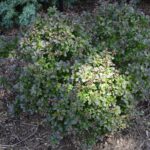
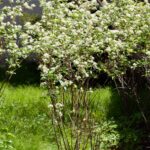
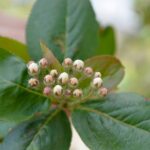
Shrub Aronia arbutifolia 'Brilliantissima' [Brilliant Red Chokeberry] The Brilliant Red Chokeberry has dark green leaves that turn a stunning deep red in the fall. 'Brilliant' produces larger and more abundant flowers and a greater number of red berries than the species type. Because birds find the fruits unappealing, the berries are allowed to persist well into the winter months. This plant tends to sucker and create colonies.
Shrub Indiana Native Aronia melanocarpa [Black Chokeberry] This Indiana native shrub is similar to the Red Chokeberry in habit and form, but differs in that the Black Chokeberry is larger, has black-colored fruits, broader leaves, and generally larger flowers. Place in a higher light location for the best flower and fruit display. Best used for naturalizing, mass plantings, and wetland reclamation projects. The berries are edible, but only palatable when used in jellies and jams.
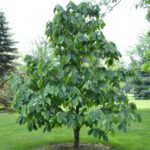
Tree Indiana Native Asimina triloba [Common Pawpaw] Needs filtered or full shade in its first few years, then tolerates full sun. Good specimen tree in a shady landscape. Fruits resemble a short, fat banana, at first green then turning yellowish then brown as they ripen in the fall, and taste like a combination between a banana and mango. Suckers rapidly.
Shrub InvasiveThis plant is considered invasive Berberis thunbergii var. atropurpurea 'Crimson Pygmy' [Red Dwarf Japanese Barberry] The Red Dwarf Japanese Barberry is exceedingly popular due to its dense, low growing form, brilliant foliage, and tolerance to tough urban conditions. For the best leaf coloration, place in full sun. This plant tolerates dry soils, but will suffer in wet, poorly drained soils.
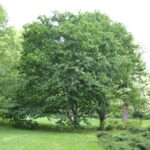
Tree Indiana Native Betula alleghaniensis [Yellow Birch] Graceful tree, interesting for its shining bark beginning yellowish or bronze and exfoliating in thin shreds, becoming reddish brown until finally forming blackish-brown plates. Especially well adapted to wet soils. Does not do well in dry situations. Less subject to the borer troubles of B. papyrifera in the Midwest.
Tree Betula papyrifera 'Renci' [sold as Renaissance Reflection®] [Renaissance Reflection Paper Birch] Betula papyrifera 'Renci' is faster growing and more heat resistant than the straight species. This tree requires full sun and is not suitable for poor or polluted city conditions.
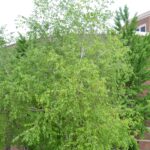
Tree Indiana Native Betula populifolia [Gray Birch] Beautiful white bark, although becomes dirty gray with age. Does well on the poorest of sterile soils, seeds, and suckers quickly. Grows on sandy, rocky and even gravelly sites. Tolerates both wet and dry conditions. Prefers full sun. Susceptible to leaf miner and cankers; more resistant to the bronze birch borer. Leaf minors especially problematic.
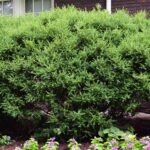
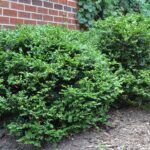
Shrub Buxus sinica var. insularis [Korean Littleleaf Boxwood] The Korean Littleleaf Boxwood grows best when placed in areas of moderate shade that are away from strong winter sun and wind. It has shallow roots and prefers moist, cool soils. This shrub flowers in April; flowers can attract bees due to the fragrance but are not showy.
Shrub Buxus × 'Green Velvet' [Green Velvet Boxwood] This species is a hybrid of Buxus sinica and Buxus sempervirens and is primarily used for smaller spaces.