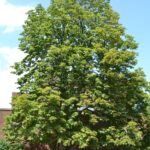
Tree Audio Recording AvailablePurdue Plant Doctor Available Acer pseudoplatanus [Sycamore Maple] Tolerates salt spray. Produces a lot of dead wood that needs removal. Anthracnose and canker disease can be serious. Audio Recording AvailablePurdue Plant Doctor Available
Tree Indiana Native Audio Recording AvailableID That Tree Video AvailablePurdue Plant Doctor Available Acer saccharum [Sugar Maple] Widely adapted to climate, but best in at least reasonably fertile soil. One of the best shade tree species over a wide area, but for best results select plants known for adaptability to the local region. Quite shade tolerant. Low maintenance in a good site. 50 gal. sap or more needed to make 1 gal. syrup. Not so drought-tolerant as silver maple, but reasonably so. Does poorly in compacted soils, and doesn't like salt spray.… Indiana NativeAudio Recording AvailableID That Tree Video AvailablePurdue Plant Doctor Available
Tree Purdue Plant Doctor Available Acer tataricum ‘Garann’ [sold as Hot Wings® Tatarian Maple] [Hot Wings Tatarian Maple] The cultivar name comes from the scarlet red winged fruits that appear on this tree in mid to late summer. Purdue Plant Doctor Available
Tree Indiana Native Audio Recording AvailableID That Tree Video AvailablePurdue Plant Doctor Available Aesculus glabra [Ohio Buckeye] Widely adapted to soils and environments; however, very dry conditions must be avoided. Drought causes early leaf drop. Leaf blotch and leaf scorch often disfigure foliage, especially in dry soil. Spiny fruits in autumn can be troublesome underfoot, and eliminates species type as a good street tree. Fruits are toxic, containing 3-5% saponins. Indiana NativeAudio Recording AvailableID That Tree Video AvailablePurdue Plant Doctor Available
Tree Audio Recording AvailablePurdue Plant Doctor Available Aesculus hippocastanum 'Baumannii' [Baumann Common Horsechestnut] 'Baumannii' is known for its large panicles of double flowers. The flowers are sterile, so none of the large, littering, poisonous fruit of the species type are produced, increasing this tree's usability. Widely adapted to soils and environments; however, very dry conditions must be avoided. Leaf blotch often disfigures foliage. Audio Recording AvailablePurdue Plant Doctor Available
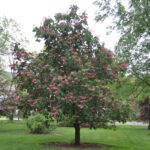
Tree Audio Recording AvailablePurdue Plant Doctor Available Aesculus × carnea [Red Horsechestnut] More drought resistant and more resistant to blotch and mildew than A. hippocastanum. Comes true to type from seed. Flowers at early age. Does not perform well in dry sites. Prickly fruits may be a problem underfoot. Fruits are poisonous (containing toxic saponins). Often develops branches having narrow crotch angles (branches that should be removed). Audio Recording AvailablePurdue Plant Doctor Available
Tree Purdue Plant Doctor Available Amelanchier alnifolia [Saskatoon serviceberry] Purdue Plant Doctor Available
Tree Indiana Native Audio Recording AvailableID That Tree Video AvailablePurdue Plant Doctor Available Amelanchier arborea [Downy Serviceberry] Would grow well on a streambank. Susceptible to rust, leaf blight, powdery mildew, fruit rot, leaf minor, borers, and scale. Rarely requires pruning. Indiana NativeAudio Recording AvailableID That Tree Video AvailablePurdue Plant Doctor Available
Tree Purdue Plant Doctor Available Amelanchier laevis 'Snowcloud' [Snowcloud Serviceberry] The Snowcloud® Serviceberry gets its name from the large white flowers that the tree blooms in Spring. Purdue Plant Doctor Available
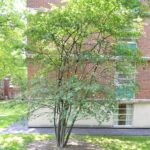
Tree Audio Recording AvailablePurdue Plant Doctor Available Amelanchier × grandiflora 'Autumn Brilliance' [sold as Autumn Brilliance®] [Autumn Brilliance Apple Serviceberry] A. x grandiflora 'Autumn Brilliance is a vigorous selection with impressive blooms and bright red fall colors. It is resistant to leaf spot. The berries are frequently used to make jams, jellies, and pies. This selection can be found in both single and multi-trunk forms. Audio Recording AvailablePurdue Plant Doctor Available