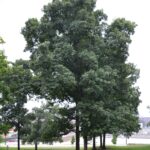
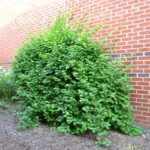
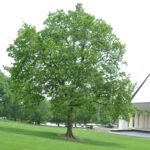
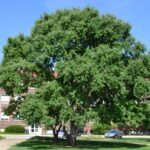
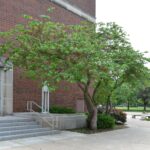
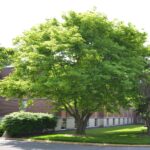
Tree Indiana Native Celtis occidentalis [Common Hackberry] As well adapted to Midwestern conditions as American Elm, and a reasonably good substitute in form as well. Especially useful in large-scale situations with dry soils and heavy winds. Subject to a leaf nipple gall (caused by psyllid insect Pachypsylla dismamma, one of many jumping plant lice) and witches'-broom disease (caused by Eriophyid mite), both minor in most situations in the Midwest. Especially coarse texture limits use in designed landscapes.
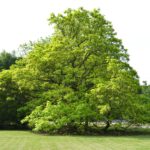
Tree Cercidiphyllum japonicum [Katsuratree] More hardy once established than when young. A striking specimen tree, useful for partial shade and accent. Unusually free of insect problems. Leafs out early in spring. Forms multiple trunks unless pruned. Does not transplant well. Not very drought-tolerant, particularly after transplanting.
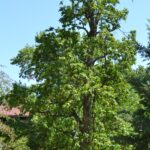
Tree Indiana Native Cercis canadensis [Eastern Redbud] A fine small tree that grows wild in many parts of Indiana. Relatively trouble-free and drought-resistant. Requires some protection from the sun in hotter climates, however flowering decreases with deep shade. Canker, leaf spot, and verticillium wilt can be problematic for older trees, or trees weakened by other environmental stresses. Due to genetic variability, be sure of seed source. Long tap root means that older plants transplant poorly.
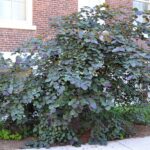
Tree Cercis canadensis 'Forest Pansy' [Purple-Leaf Eastern Redbud] 'Forest Pansy' is a unique and attractive cultivar that has deep purple foliage, which generally fades to a dark, lustrous green in late summer or under drought conditions. Beautiful rose-purple flowers smother the branches in the spring. A fine small tree that is relatively trouble-free and drought-resistant. Requires some protection from the sun in hotter climates, however flowering decreases with deep shade. Canker, leaf spot, and verticillium wilt can be problematic for older trees, or…
Tree Indiana Native Cladrastis kentukea [American Yellowwood] A highly ornamental native tree, even though the pendulous clusters of flowers do not appear in great numbers every year. Well-adapted to Midwest conditions. Develops a tap root. Does not flower fully each year; part of a tree may flower one year, part the next, but the effect is striking even when only certain branches bear flowers. Bees are attracted to the flowers. Flowers appear only after many years from seed. Avoid pruning in spring…
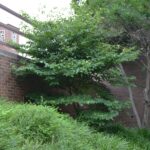
Tree Indiana Native Cornus alternifolia [Pagoda Dogwood] Broad-spreading, low branched, forming stratified tiers, very interesting branching habit. Leaf spot and twig blight/canker can be problem for older trees.
Shrub/Tree Cornus officinalis [Japanese Cornel Dogwood] The Japanese Cornel Dogwood is a large multi-stemmed shrub or small tree of oval rounded outline, usually branching to the ground. No serious disease problems, although it sometimes suckers abundantly. These suckers should be removed to control spread; this is especially important if maintaining this plant in tree form. Closely related to Cornus mas, but tends to have more attractive bark, is more open in habit, flowers one to two weeks earlier, and is slightly…
Shrub/Tree Cotinus coggygria 'Purpureus' [Purpureus Smokebush] 'Purpureus' is known for its purple-pink fruiting panicles. Can be pruned to low framework each year to promote plant coloration which occurs best on vigorous stems. Misty fruiting panicles give the species its name. The fine-textured hairs on the fruit pedicels and peduncles change colors, being best when tinted smoky purple to pink.
Shrub/Tree Cotinus × 'Grace' [Grace Smokebush] 'Grace' has become a popular cultivar with its purple emerging leaves and giant panicles of smokey, pink flowers. The "flowers" are actually misty fruiting panicles that give the species its name. The fine-textured hairs on the fruit pedicels and peduncles change colors, being best when tinted smoky pink. Can be pruned to low framework each year to promote plant coloration which occurs best on vigorous stems.
Tree Indiana Native Gleditsia aquatica [Water Locust] This native Indiana tree species is found in three southwestern counties near the lower Wabash River. It is often found in wet or ponded locations where there is standing water or high water tables. Not recommended for the landscape as it has large, multi-pronged thorns. Like its cousin, the honey locust, it has compound leaves, but can be differentiated by its location, much smaller seed pods, and flattened thorns along the branches.