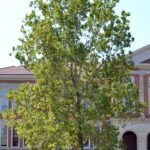
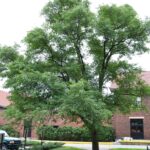
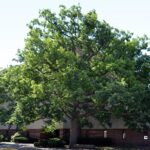
Tree Indiana Native Audio Recording AvailableID That Tree Video AvailablePurdue Plant Doctor Available Quercus bicolor [Swamp White Oak] The Swamp White Oak is a sturdy, long-lived tree that is generally tolerant to average conditions and even wet soil, but requires full sun and acidic soil. Indiana NativeAudio Recording AvailableID That Tree Video AvailablePurdue Plant Doctor Available
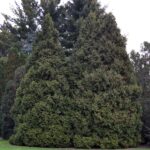
Tree Audio Recording AvailablePurdue Plant Doctor Available Quercus × 'Crimschmidt' [sold as Crimson Spire™] [Crimson Spire Oak] The Crimson Spire Oak is notable for its powdery mildew resistance and reddish fall color that it gained from its White Oak parent, in addition to the dense, strong, vertical, columnar form, and tolerance to drought and urban conditions gained from its Fastigiate English Oak parent. Audio Recording AvailablePurdue Plant Doctor Available
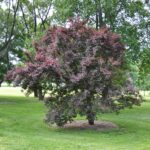
Tree Indiana Native Audio Recording AvailablePurdue Plant Doctor Available Quercus falcata [Southern Red Oak] Generally hardy only to zone 6, this oak is native to the southeastern United States, including the southern tip of Indiana, but can sometimes be grown in colder climates. This tree gained its specific epithet name, "falcata", from the sickle-like weapon of the same name, in reference to the sickle-shaped lobes of the leaves. Root disturbance is known to affect this species severely and can lead to decline or death. Indiana NativeAudio Recording AvailablePurdue Plant Doctor Available
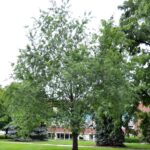
Tree Indiana Native Audio Recording AvailableID That Tree Video AvailablePurdue Plant Doctor Available Quercus imbricaria [Shingle Oak] Somewhat tolerant of city conditions. Can be pruned into a hedge. Leaves persist into winter after the normal leaf-raking period and then fall. Oak gall is susceptible, but it is a minor problem. Unlike its relatives, the shingle oak's leaves do not feature any lobes and have a complete margin. Indiana NativeAudio Recording AvailableID That Tree Video AvailablePurdue Plant Doctor Available
Tree Indiana Native Audio Recording AvailableID That Tree Video AvailablePurdue Plant Doctor Available Quercus macrocarpa [Bur Oak] More tolerant of city conditions than most oaks. Perhaps too large for a typical residential landscape when mature. Indiana NativeAudio Recording AvailableID That Tree Video AvailablePurdue Plant Doctor Available
Tree Indiana Native Audio Recording AvailableID That Tree Video AvailablePurdue Plant Doctor Available Quercus muehlenbergii [Chinquapin Oak] More tolerant of city conditions than most oaks. Indiana NativeAudio Recording AvailableID That Tree Video AvailablePurdue Plant Doctor Available
Tree Indiana Native Audio Recording AvailableID That Tree Video AvailablePurdue Plant Doctor Available Quercus palustris [Pin Oak] Handsome tree, distinctive for its regular branching, spreading to horizontal to pendulous, from top to bottom of the tree. This effect is partly lost when lower limbs must be removed for traffic underneath. Requires an acidic soil and is subject to severe iron chlorosis on calcareous soils. This can be corrected but it means additional maintenance. Indiana NativeAudio Recording AvailableID That Tree Video AvailablePurdue Plant Doctor Available
Tree Indiana Native Audio Recording AvailableID That Tree Video AvailablePurdue Plant Doctor Available Quercus rubra [Northern Red Oak] One of the best and most reliable of oaks as a shade or street tree. More vigorous and fast-growing than most oaks. Good street tree since it performs reasonably well in small soil volumes (although it tends to branch close to ground). Oak wilt disease has been troublesome in certain areas of the Midwest. Hybridizes easily with other oaks (be careful of source). Indiana NativeAudio Recording AvailableID That Tree Video AvailablePurdue Plant Doctor Available
Shrub/Tree InvasiveThis plant is considered invasive Audio Recording AvailableID That Tree Video AvailablePurdue Plant Doctor Available Rhamnus cathartica [Common Buckthorn] Tolerates most sites. Dioecious. Very invasive, by the seeds that birds love to eat; probably best to refrain from planting this species in the landscape. Susceptible to rusts (Puccinia coronata), that also attacks oats (in oat growing areas, buckthorn eradication is recommended). The bark, leaves, and fruit were once used in purgatives, thus one of this plant's common names, "Purging Buckthorn". Audio Recording AvailableID That Tree Video AvailablePurdue Plant Doctor Available
Shrub Audio Recording AvailablePurdue Plant Doctor Available Rhododendron catawbiense [Catawba Rhododendron] The Catawba Rhododendron is considered to be one of the hardiest rhododendron species. Beautiful plant when it is used in mass. Flower color of the species does not combine well with some other flower colors. Flower color bleaches out in high pH. Subject to winter burning of foliage in exposed sites near the limits of its range. Both flowers and foliage are of equal value in the landscape. Cultivars are usually less hardy than species.… Audio Recording AvailablePurdue Plant Doctor Available