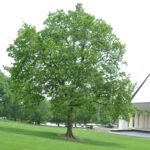
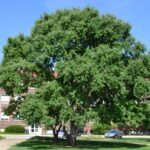
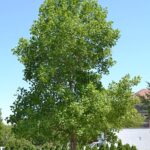
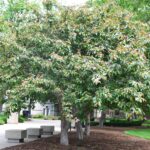
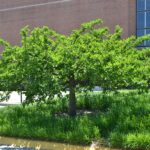
Tree Indiana Native Celtis occidentalis [Common Hackberry] As well adapted to Midwestern conditions as American Elm, and a reasonably good substitute in form as well. Especially useful in large-scale situations with dry soils and heavy winds. Subject to a leaf nipple gall (caused by psyllid insect Pachypsylla dismamma, one of many jumping plant lice) and witches'-broom disease (caused by Eriophyid mite), both minor in most situations in the Midwest. Especially coarse texture limits use in designed landscapes.
Tree Cercidiphyllum japonicum [Katsuratree] More hardy once established than when young. A striking specimen tree, useful for partial shade and accent. Unusually free of insect problems. Leafs out early in spring. Forms multiple trunks unless pruned. Does not transplant well. Not very drought-tolerant, particularly after transplanting.
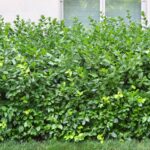
Shrub Euonymus fortunei 'Vegetus' [Vegetus Wintercreeper Euonymus] This cultivar has a more shrub-like habit than the species type, but can be moderately effective as a groundcover or wall climber. Also much heavier fruiting than the straight species; the fruiting display can be quite attractive, if fruits are borne in high enough numbers. Very susceptible to Euonymus Scale.
Tree Indiana Native Liriodendron tulipifera [Tuliptree] Handsome, tall shade tree with strong central leader. Performs best in good soil with adequate moisture. Variable in hardiness, depending on geographic source. Use native stock when possible. State tree of Indiana, Kentucky, North Carolina, and Tennessee. Slightly weak-wooded. Subject to damage in very windy sites. Subject to aphid and scale insects when weakened. Needs good drainage and a lot of soil (tree lawn may be too small). Its poorly branched fleshy root system (taproot)…
Tree Malus × 'Indian Magic' [Indian Magic Flowering Crabapple] The Flowering Crabapple is a popular small ornamental tree with an extremely showy flower display in the spring. 'Indian Magic' is not as disease resistant as others, being moderately susceptible to scab. Tends to flower and fruit in alternate years. Well-drained heavy loam soils and full sun promote best growth. Can be susceptible to many pests and diseases, including apple scab, fireblight, Japanese beetles, leaf spot, cedar-apple rust, and powdery mildew. May look ragged at…
Tree Malus sargentii [Sargent Crabapple] The smallest of all Malus species, almost a shrub. Strongly horizontal branching. Tends to be apomictic (seeds develop without fertilization), so is usually very uniform from seed (i.e. clonal). Sometimes flowers and fruits in alternate years. Susceptible to apple scab disease. May require pruning of wayward and crossing branches to maintain a nice form.
Tree Populus tremuloides 'NE Arb' [sold as Prairie Gold®] [Prairie Gold Quaking Aspen] Prairie Gold® Quaking Aspen is more tolerant to urban conditions including heat, drought, and humidity. The Aspen's name is derived from its golden yellow fall color. Native from Labrador to Alaska, south to Pennsylvania, Missouri, northern Mexico and lower California.
Tree Prunus sargentii [Sargent Cherry] One of the better performing and useful cherries available. Beautiful, polished reddish to chestnut brown bark on older trunks. Subject to several minor pests, none usually serious.
Tree Ulmus americana 'Valley Forge' [Valley Forge American Elm] This cultivar has the classic vase-like form and ascending branches that the American elm is know for, while also having the best Dutch elm disease resistance of the new "Dutch elm resistant" cultivars. Important to stake when young.
Tree Ulmus × hollandica 'Pioneer' [Pioneer Dutch Elm] Resistant to Dutch elm disease and phloem necrosis, but susceptible to the elm leaf beetle.