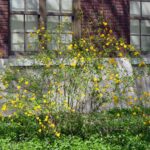
Shrub Kerria japonica [Japanese Kerria] Fairly adaptable to soils and microclimates, including considerable shade; best out of extremely sunny exposures. Occasionally winter-injured in the north, but otherwise relatively trouble-free. Suckers and spreads slowly. Needs occasional pruning to remove dead branches and renewal pruning to maintain form.
Shrub Kerria japonica 'Golden Guinea' [Golden Guinea Japanese Kerria] 'Golden Guinea' has crisply textured leaves and bears an abundance of large yellow flowers. Fairly adaptable to soils and microclimates, including considerable shade; best out of extremely sunny exposures. Occasionally winter-injured in the north, but otherwise relatively trouble-free. Suckers and spreads slowly. Needs occasional pruning to remove dead branches and renewal pruning to maintain form.
Shrub Kerria japonica 'Pleniflora' [Double Flowered Japanese Kerria] 'Pleniflora' is a very popular cultivar of Japanese Kerria with its long lasting, bright yellow, double flowers that are nearly spherical, reminiscent of "pom-poms". Fairly adaptable to soils and microclimates, including considerable shade; best out of extremely sunny exposures. Occasionally winter-injured in the north, but otherwise relatively trouble-free. Suckers and spreads slowly. Needs occasional pruning to remove dead branches and renewal pruning to maintain form.
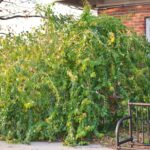
Shrub InvasiveThis plant is considered invasive Lonicera maackii [Amur Honeysuckle] Widely adaptable to different soils and exposures. Can be trained into a small patio tree. Suckers freely, requiring pruning in intensive situations. Seeds, carried by birds, germinate freely, and weed seedlings result. High shade tolerance contributes greatly to its highly invasive character. Perhaps the worst woody weed in the Midwestern and Northwestern US.
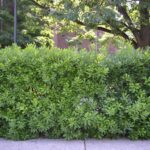
Shrub/Tree Myrica pensylvanica [Northern Bayberry] Waxy gray berries were used by early settlers for making aromatic candles, and occasionally still are used for this purpose. Especially good plant for full sun and sandy soils, but grows well on many soils. Tolerates half shade. Relatively salt-tolerant. Forms colonies via suckers. Fixes nitrogen in the soil. Dioecious. Use female plants (when known) for fruiting, and occasional male for pollination. Difficult to transplant from field.
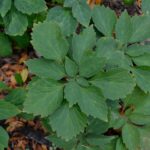
Shrub Indiana Native Pachysandra procumbens [Allegheny Pachysandra] A shade loving plant, the pachysandra procumbens can be a good naturalizing groundcover with greyish green leaves. The Alleghany Pachysandra is considered to be more attractive than the overused Pachysandra terminalis. It is considered deciduous in USDA Zones 5 and 6 bue semi-evergreen to evergreen in Zones 7-9.
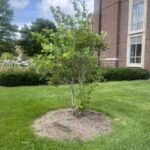
Tree Indiana Native Populus tremuloides [Quaking Aspen] The common name of Populus tremuloides is derived from the tendency of the leaves to tremble (quake) in the wind, or even light breezes, due to flattened petioles. This is a fast-growing and short-lived species that regenerates from root suckers and can quickly recolonize disturbed sites. Generally, most of the specimens in a grove of P. tremuloides are clones, all originating from the same stem. This plant is dioecious, so groves are usually all male…
Tree Populus tremuloides 'NE Arb' [sold as Prairie GoldĀ®] [Prairie Gold Quaking Aspen] Prairie GoldĀ® Quaking Aspen is more tolerant to urban conditions including heat, drought, and humidity. The Aspen's name is derived from its golden yellow fall color. Native from Labrador to Alaska, south to Pennsylvania, Missouri, northern Mexico and lower California.
Shrub Indiana Native Prunus pumila [Sand Cherry] Prunus pumila is a creeping, low-growing small shrub naturally found in sandy locations, such as dunes, where it acts an important stabilizer. The cherry fruits are too bitter to eat fresh, but can be used in jams and jellies.
Shrub Indiana Native Rhus copallinum [Flameleaf Sumac] The Flameleaf Sumac is a large shrub or small tree known for its extraordinary, "flaming" red fall color. Its form is initially compact, but then becomes quite open and irregular with age. Spreads by root suckers and forms large colonies, making it inappropriate for small areas.