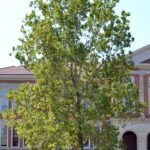
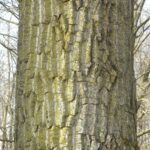
Tree Prunus sargentii [Sargent Cherry] One of the better performing and useful cherries available. Beautiful, polished reddish to chestnut brown bark on older trunks. Subject to several minor pests, none usually serious.
Tree Prunus sargentii 'Columnaris' [Columnar Sargent Cherry] One of the better performing and useful cherries available. This cultivar is known for its very upright, vase-shaped, and somewhat columnar form. Beautiful, polished reddish to chestnut brown bark on older trunks. Subject to several minor pests, none usually serious.
Tree Prunus sargentii 'JFS-KW58' [sold as Pink Flair®] [Pink Flair Sargent Cherry] One of the better performing and useful cherries available. Compared to the straight species, Pink Flair is more strongly upright and vase-shaped and the pink flowers are larger and brighter. Beautiful, polished reddish to chestnut brown bark on older trunks. Subject to several minor pests, none usually serious.
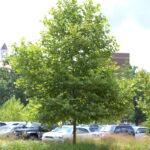
Tree Indiana Native Prunus serotina [Black Cherry] Probably the best native-American species of cherry for landscape use, but still useful only in a few situations, especially for naturalizing. A valuable timber tree, especially for furniture. Subject to several minor pests, none usually serious in naturalized situations. Wood is slightly brittle. Eastern tent caterpillar problematic is some years.
Tree Prunus serrulata 'Sekiyama' [Sekiyama Japanese Flowering Cherry] The Japanese Flowering Cherry prefers rich, moist, well-drained loams and full sun. It can tolerate part shade (at the expense of blooms), as well as heat, humidity, and even some drier soils (once it is established). This tree is susceptible to many pests, including leaf spot, powdery mildew, fireblight, Japanese beetles, aphids, scale, borers, leafhoppers, and caterpillars. 'Kwanzan', which is also known as 'Kanzan' or 'Sekiyama,' grows 30 to 40 feet high. This variant, sometimes…
Shrub/Tree Indiana Native Prunus virginiana [Common Chokecherry] The Common Chokecherry can be a suckering small tree or large shrub that produces fragrant white racemes followed by small, purple-black cherries. These fruits can be used for pies, jellies, and jams (do not eat fresh). Suckers must be immediately removed to control growth.
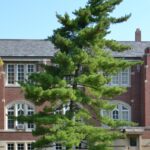
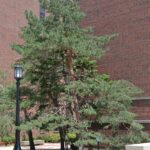
Tree Pseudotsuga menziesii [Douglas Fir] A highly variable species, in cold and drought hardiness, color, and form. For use in the Midwest, select the hardiest available forms. Prefers atmospheric moisture. Historically, has been an important timber tree in the West.
Shrub Pyracantha coccinea [Scarlet Firethorn] A favorite for espalier training, because of the adaptable branching habit and showy orange-red fruits. Tends to be semi-evergreen in cooler climates and evergreen in warmer climates. Adapted to a variety of soils and environments. Fireblight can be serious. Other problems are scab and leaf and twig blight.
Shrub Pyracantha coccinea 'Kasan' [Compact Scarlet Firethorn] A favorite for espalier training, because of the adaptable branching habit and showy orange-red fruits. Tends to be semi-evergreen in cooler climates and evergreen in warmer climates. Adapted to a variety of soils and environments. 'Kasan' is a hardier (USDA zone 5), compact cultivar with spreading branches and excellent fruit set. Scab can be serious in this cultivar. Other possible problems include fireblight and leaf and twig blight.
Shrub Pyracantha coccinea 'Lalandei' [Lalandei Scarlet Firethorn] A favorite for espalier training, because of the adaptable branching habit, showy fruits, and vigourous growth. Adapted to a variety of soils and environments but is susceptible to scab. 'Lalandei' is the most popular Scarlet Firethorn cultivar in northern areas, although it may winter burn.