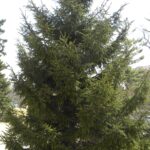
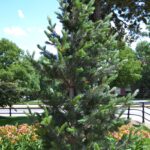
Tree Audio Recording AvailablePurdue Plant Doctor Available Pseudotsuga menziesii [Douglas Fir] A highly variable species, in cold and drought hardiness, color, and form. For use in the Midwest, select the hardiest available forms. Prefers atmospheric moisture. Historically, has been an important timber tree in the West. Audio Recording AvailablePurdue Plant Doctor Available
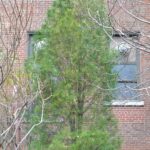
Tree Audio Recording AvailablePurdue Plant Doctor Available Pseudotsuga menziesii 'Fastigiata' [Columnar Douglas Fir] Pseudotsuga menziesii is a highly variable species, in cold and drought hardiness, color, and form. For use in the Midwest, select the hardiest available forms. Prefers atmospheric moisture. Historically, has been an important timber tree in the West. 'Fastigiata' is a dense, columnar cultivar with distinctly upright branches. Audio Recording AvailablePurdue Plant Doctor Available
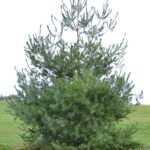
Tree InvasiveThis plant is considered invasive Audio Recording AvailableID That Tree Video AvailablePurdue Plant Doctor Available Pyrus calleryana 'Aristocrat' [sold as Aristocrat®] [Aristocrat Callery Pear] Aristocrat is one of the better performing Callery Pear variants. Flowers are malodorous, but the later blooming Aristocrat flowers are not as often killed by late spring freezes as are the flowers of other P. calleryana variants. Some fireblight susceptibility, especially in the south. The branching of Aristocrat is more horizontal and does not form as narrow crotch angles as many other Callery Pears. Very small fruits are a litter problem when abundant. Considered invasive… Audio Recording AvailableID That Tree Video AvailablePurdue Plant Doctor Available
Tree Purdue Plant Doctor Available Pyrus salicifolia [Willowleaf Pear] The Willowleaf Pear is an uncommon, but elegant tree with arching branches covered with silvery, narrow, willow-like foliage. Attractive clusters of white flowers appear in the spring. Severe fireblight susceptibility. Purdue Plant Doctor Available
Tree Purdue Plant Doctor Available Quercus bicolor 'Bonnie and Mike' [sold as Beacon®] [Beacon Oak] 'Bonnie and Mike' is a cultivar with dense and glossy green foliage. Good for urban use with its tight upright columnar branching. It also has yellow fall color. Purdue Plant Doctor Available
Tree Indiana Native Audio Recording AvailableID That Tree Video AvailablePurdue Plant Doctor Available Quercus coccinea [Scarlet Oak] Excellent scarlet fall foliage, comparable if not often better than the Pin Oak. Does not suffer iron chlorosis as bad as Pin Oak, being more tolerant of alkaline soils. Some report difficulty in transplanting. Indiana NativeAudio Recording AvailableID That Tree Video AvailablePurdue Plant Doctor Available
Tree Audio Recording AvailablePurdue Plant Doctor Available Quercus × 'Crimschmidt' [sold as Crimson Spire™] [Crimson Spire Oak] The Crimson Spire Oak is notable for its powdery mildew resistance and reddish fall color that it gained from its White Oak parent, in addition to the dense, strong, vertical, columnar form, and tolerance to drought and urban conditions gained from its Fastigiate English Oak parent. Audio Recording AvailablePurdue Plant Doctor Available
Tree Indiana Native Audio Recording AvailablePurdue Plant Doctor Available Quercus × deamii [Deam Oak] The Deam Oak is a rare hybrid between the White Oak (Quercus alba) and the Chinquapin Oak (Quercus muehlenbergii) that can be found in mature forests. Quercus x deamii was first discovered in Wells County, Indiana, about 4 miles outside the town of Bluffton in 1904 by Bruce Williamson, a zoologist, and his father. Not sure what they had found, they took the specimen to Charles C. Deam who later sent the sample to his… Indiana NativeAudio Recording AvailablePurdue Plant Doctor Available
Tree Indiana Native Audio Recording AvailableID That Tree Video AvailablePurdue Plant Doctor Available Quercus ellipsoidalis [Northern Pin Oak] Quercus ellipsoidalis is very closely related to Q. palustris (Pin Oak), but is better suited for the Midwest. Very similar to the Pin Oak, the Northern Pin Oak is a handsome tree with distinctive and regular branching, spreading to horizontal to drooping, from top to bottom of the tree. This effect is partly lost when lower limbs must be removed for traffic underneath. While this species is still prone to chlorosis (yellowing of leaves) in… Indiana NativeAudio Recording AvailableID That Tree Video AvailablePurdue Plant Doctor Available
Tree Indiana Native Audio Recording AvailableID That Tree Video AvailablePurdue Plant Doctor Available Quercus imbricaria [Shingle Oak] Somewhat tolerant of city conditions. Can be pruned into a hedge. Leaves persist into winter after the normal leaf-raking period and then fall. Oak gall is susceptible, but it is a minor problem. Unlike its relatives, the shingle oak's leaves do not feature any lobes and have a complete margin. Indiana NativeAudio Recording AvailableID That Tree Video AvailablePurdue Plant Doctor Available