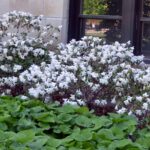
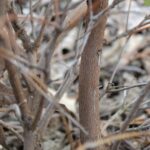
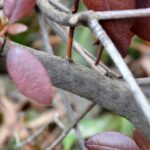
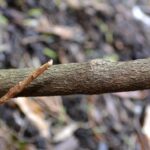
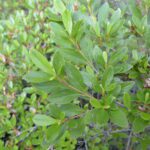
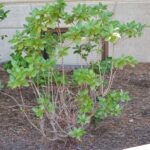
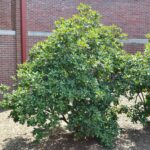
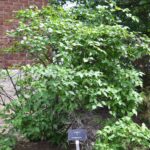
Shrub Audio Recording AvailablePurdue Plant Doctor Available Rhus aromatica 'Gro-low' [Low Growing Fragrant Sumac] 'Gro-low', as the name implies, is a very low-growing (and popular) female cultivar. Rhus aromatica is native to dry, sandy, and rocky soils, and usually colors well under these conditions. Useful for bank stabilization since it develops roots on stems touching the soil. It also suckers. Can spread too quickly for some sites (spreading rhizomes). Shear to ground to rejuvenate (try a brush-hog). Audio Recording AvailablePurdue Plant Doctor Available
Shrub Indiana Native Audio Recording AvailableID That Tree Video AvailablePurdue Plant Doctor Available Rhus copallinum [Flameleaf Sumac] The Flameleaf Sumac is a large shrub or small tree known for its extraordinary, "flaming" red fall color. Its form is initially compact, but then becomes quite open and irregular with age. Spreads by root suckers and forms large colonies, making it inappropriate for small areas. Indiana NativeAudio Recording AvailableID That Tree Video AvailablePurdue Plant Doctor Available
Shrub Indiana Native Audio Recording AvailableID That Tree Video AvailablePurdue Plant Doctor Available Rhus glabra [Smooth Sumac] Large, club-like fruit clusters and rather coarse compound leaves make this a plant that can best be appreciated from a distance, and so it is at its best in large-scale plantings. Picturesque branches. Hard to kill this plant. Can be rejuvenated by cutting to ground in late winter. Plants are dioecious, so only females have the fruiting interest, but all plants are reliably colorful in fall foliage. Spreads rapidly by suckers. Indiana NativeAudio Recording AvailableID That Tree Video AvailablePurdue Plant Doctor Available
Shrub Audio Recording AvailablePurdue Plant Doctor Available Ribes alpinum [Alpine Currant] Dioecious (male clones used mostly because these are thought to be rust resistant). Quite resistant to white pine blister rust, whereas other Ribes are not. Many insects and diseases. Flowers not showy and fruits not edible. Audio Recording AvailablePurdue Plant Doctor Available
Shrub Indiana Native Purdue Plant Doctor Available Ribes americanum [American Black Currant] American Black Currant is a shade and wet soil tolerant shrub species often found in our Indiana woodlands. Small greenish-white flowers bloom in May which leads to dark red to black fruits that ripen in late August/September. When placed in full sun, a brilliant reddish orange fall color is produced but often golden yellow in the fall. The edible fruits are used in jams and jellies and are desirable food source for wildlife. An alternative… Indiana NativePurdue Plant Doctor Available
Herbaceous Rodgersia podophylla 'Braunlaub' [sold as Braunlaub Finger-leaf Rodgersia] [Braunlaub Finger-leaf Rodgersia]
Shrub Indiana Native Audio Recording Available Rubus odoratus [Flowering Raspberry] The Flowering Raspberry offers great texture into the landscape with its exfoliating bark during the winter months and its large course leaves during the summer months. Its rich, pink-purple flowers begin to bloom in early June, offering fragrance and color. The flowers and fruits often attract birds and other wildlife, including butterflies and bees. Indiana NativeAudio Recording Available
Shrub/Tree Purdue Plant Doctor Available Salix caprea [Pussy Willow] Salix caprea is one of several species commonly referred to as "Pussy Willows". The common name is derived from the silky soft male catkins (species is dioecious). Tolerates heavy pruning and can be cut to the ground every 3-5 years to maintain size. The wood of this plant is weak and easily damaged. This species is susceptible to many pests and diseases. Purdue Plant Doctor Available
Shrub Purdue Plant Doctor Available Sambucus nigra 'Eva' [Sold as Black Lace®] [Black Lace Elderberry] More lacy, fern-textured, dark purple leaves, pale pink flowers, 6 to 8' high; Origin for Black Beauty Purdue Plant Doctor Available
Liana (Climbing Vine) Schizophragma hydrangeoides [Japanese Hydrangea-vine] The Japanese Hydrangea-vine is a shade tolerant vine within the Hydrangea family. Root-like fixtures, or adhesive rootlets, allow this vine to grow vertically up masonry walls, trellis structures, and sides of buildings. Its flowers are lace-cap hydrangea-like clusters that bloom in mid-June through July.