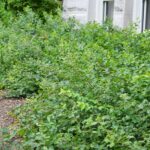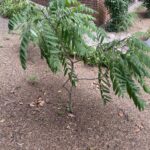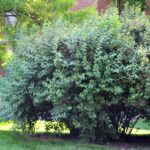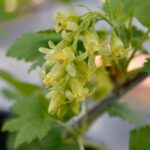
Shrub Audio Recording Available Sorbaria sorbifolia [Ural Falsespirea] Coarse texture and unusual spirea-like flowers give this plant unique summer interest. Best in large-scale situations. Spreads vigorously by suckering if not contained. Intensive root pruning can be used to control spread. Does not do the best in dry soils but does tolerate them. Does poorly in heavy wind. Flowers turn brown with senescence and esthetic is slightly improved by their removal. To some, a bit too coarse in winter habit. Audio Recording Available
Shrub Indiana Native Audio Recording AvailablePurdue Plant Doctor Available Spiraea alba [Meadowsweet] The meadowsweet is an Indiana native shrub that can be found in wet prairies, marshes, and flood plains. Its flowers appear on panicles during the later summer months and last till about September, making this shrub a great addition to the landscape as a late blooming shrub. The flowers also attract pollinators, such as bumblebees and other bee species. Wet soils are needed for this shrub and can even tolerate periods of flooding. Every three… Indiana NativeAudio Recording AvailablePurdue Plant Doctor Available
Shrub Staphylea colchica [Colchris Bladdernut] The Colchris Bladdernut is a medium sized shrub, native to the Eurasian Caucasus mountain system, in eastern Europe. Its flowers are white, bell-shaped, and very fragrant, reminding one of orange-blossoms. Its fruit gives this plant its common name, appearing as an inflated capsule. This shrub tends to sucker once established.
Shrub Indiana Native Audio Recording AvailableID That Tree Video Available Staphylea trifolia [American Bladdernut] An upright, heavily branched, suckering shrub; sometimes wide-spreading, as a small tree. Used in naturalizing; best reserved for parks and other low maintenance areas; rather nice for foliage effect. Indiana NativeAudio Recording AvailableID That Tree Video Available
Tree Audio Recording Available Stewartia pseudocamellia [Japanese Stewartia] In the wild, this specimen can grow up to 60' high, much larger than the mature landscape tree which ranges from 20-40' high. The outstanding, multi-colored bark is rich and flaking, ranging from soft grays and browns to orangish brown. There are no serious pests or diseases for this specimen. Audio Recording Available
Tree Audio Recording AvailablePurdue Plant Doctor Available Styrax japonicus [Japanese Snowbell] Relatively trouble-free. Can be susceptible to Ambrosia beetle and canker. Partial shade best in Zones 7 and 8 due to heat intolerance. Audio Recording AvailablePurdue Plant Doctor Available
Shrub Indiana Native Audio Recording AvailablePurdue Plant Doctor Available Symphoricarpos albus [Common Snowberry] Useful as a bank cover or large scale groundcover. Transplants well. This plant has a beautiful fruit show and is shade tolerant, however, it is also a twiggy, "garbage can plant" (collects leaves and blowing debris); this quality (especially prominent in the fall and winter) limits its usability in the landscape. Indiana NativeAudio Recording AvailablePurdue Plant Doctor Available
Shrub Audio Recording AvailablePurdue Plant Doctor Available Symphoricarpos × chenaultii [Chenault Coralberry] A more refined plant than the parent S. orbiculatus, perhaps more showy in flower and fruit and more useful in the shrub border. Useful as a bank cover or large scale groundcover. Transplants well. This plant has a beautiful fruit show and is shade tolerant, however, it is also a twiggy, "garbage can plant" (collects leaves and blowing debris); this quality (especially prominent in the fall and winter) limits its usability in the landscape. Audio Recording AvailablePurdue Plant Doctor Available
Shrub Audio Recording AvailablePurdue Plant Doctor Available Symphoricarpos × chenaultii 'Hancock' [Dwarf Chenault Coralberry] 'Hancock' is a low-growing, wide spreading dwarf cultivar of the Chenault Coralberry that is useful as a groundcover and for erosion control. Transplants well. This plant has a beautiful fruit show and is shade tolerant, however, it is also a "garbage can plant" (collects leaves and blowing debris). 'Hancock' appears to have less of a problem with this than the species type, though. Audio Recording AvailablePurdue Plant Doctor Available
Shrub Audio Recording AvailablePurdue Plant Doctor Available Syringa meyeri [Meyer Lilac] Flowers by the time it reaches one foot tall, very floriferous. Flowers in spring before leaves are fully out. Powdery mildew resistant. Very low maintenance. Flowers can be damaged by a late spring freeze. Best to prune immediately after flowering to promote flower buds for the next year. Audio Recording AvailablePurdue Plant Doctor Available