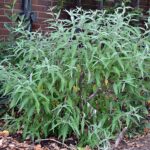
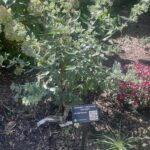
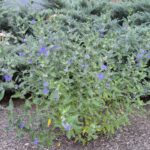
Shrub Caryopteris × clandonensis [Bluebeard] Is often killed to ground in winter, returning to flower in the same year. Functions much like an herbaceous perennial, primarily for flowering interest, blooming on new growth. This hybrid is much hardier than C. incana and much more showy than C. mongholica. Prefers full sun but tolerates partial shade. Attractive plant to bees, butterflies, and hummingbirds. Occasionally kills out completely at the northern edge of its useful range, with tops regularly killed back to…
Shrub Caryopteris × clandonensis 'Blue Mist' [Blue Mist Bluebeard] This cultivar blooms in clusters during late summer with vibrant blue flowers. Is often killed to ground in winter, returning to flower in the same year. Functions much like an herbaceous perennial, primarily for flowering interest, blooming on new growth. This hybrid is much hardier than C. incana and much more showy than C. mongholica. Attractive to bees, butterflies, and hummingbirds. Occasionally kills out completely at the northern edge of its useful range, with tops…
Shrub Caryopteris × clandonensis 'Longwood Blue' [Longwood Blue Bluebeard] This deciduous shrub is known for it's showy purple-blue flowers that bloom in spikey clusters, terminal and axillary clusters. Sources say that these clusters resemble blue smoke or mist resulting in its nickname Blue Mist.
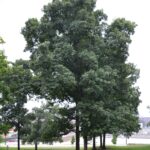
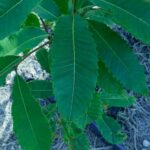
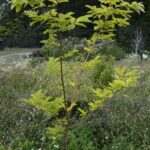
Tree Indiana Native Castanea dentata [American Chestnut] Highly susceptible to chesnut blight, causing this tree to be nearly extinct in the wild.
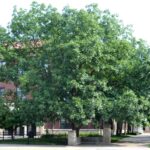
Tree Castanea dentata × mollissima [Dunstan Chestnut] Celebrated due to the quality of its fruit. Excellent nut quality that is attractive to deer and wildlife. Nuts drop in autumn, September-October. Often chosen as an orchard tree.
Tree Castanea mollissima [Chinese Chestnut] Overall tough and durable, but can be susceptible to blight, twig canker, and orient chestnut wasp. Also susceptible to weevils, which damages the roots. Prefers well-drained, loamy soils, full sun, and hot, arid conditions.
Tree Catalpa bignonioides 'Aurea' [Golden Southern Catalpa] The Golden Southern Catalpa can tolerate full sun, but does best in part sun to part shade. This species is weak wooded and should not be placed where it is open to wind and storm damage. 'Aurea' is known for its rich yellow leaf coloration and its broad form. Its flowers are trumpet shaped and white with yellow and purple spots.
Tree Catalpa ovata [Chinese Catalpa] The Chinese Catalpa is smaller than other Catalpa species, generally only reaching 30 feet. It produces attractive yellow-white flowers in the spring, but they are not as ornamental as those of other Catalpa species. Its coarse winter trunk and branches are bold and striking; picturesque, but can be too coarse for many urban landscapes. Best for difficult areas. Wood is rot resistant, but is somewhat brittle so branches can fall in wind and ice storms.…
Tree Indiana Native Catalpa speciosa [Northern Catalpa] Coarse winter trunks and branches are bold and striking; picturesque. Best for difficult areas. Wood is rot resistant, but is somewhat brittle so branches can fall in wind and ice storms. Too coarse of texture for most urban landscapes. Short-lived to about 50 years.