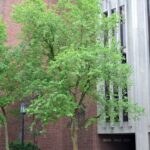
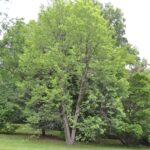
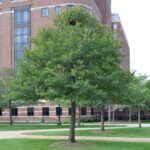
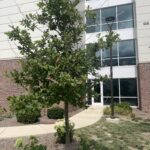
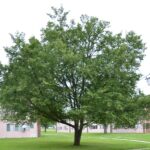
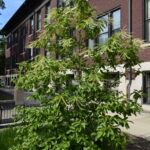
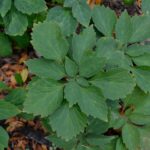
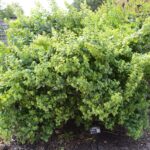
Tree Indiana Native Maclura pomifera [Osage-orange] Withstands wind and dry conditions well. Used by farmers as a hedgerow for livestock fencing because of its thorniness. Highly deer resistant. Fruits are said to be an insect and rodent repellent. Extremely decay resistant wood, containing 1% by weight 2,3,4,5-tetrahydroxystilbene (a fungitoxic compound). Large fruits create litter problem; select staminate trees to avoid fruit (unless you believe the fruits are of interest). Due to invasive root system, do not plant near sewer or drainage…
Tree Indiana Native Magnolia acuminata [Cucumbertree Magnolia] This tree gets it name from the cucumber-looking fruits it bears in the fall. Full sun is best, although it has tolerance for partial shade. Because the roots are thick and fleshy and grow downward more than out, it can be moderately difficult to transplant. Generally trouble-free, but scale can be a problem on occasion. This species may not be ideal for street tree plantings because of a tendency to suffer ice damage.
Tree Indiana Native Magnolia tripetala [Umbrella Magnolia] Full sun or light partial shade. Tropical appearance. Flowers are creamy white with an unpleasant smell. The cone-like rosy red fruit matures in September-October. Endangered in Indiana. Large leaves can be injured by hail or wind. Perhaps too coarse for most landscape situations.
Tree Magnolia virginiana 'Northern Belle' [Northern Belle Sweetbay Magnolia] The most cold-hardy evergreen magnolia. Large white blossoms that open with the scent of vanilla. This is great around woodlands and near water, where it still grows in very wet soil. Can take full sun or partial shade. Pests and diseases are almost never a problem and has some resistance to drought.
Tree Indiana Native Nyssa sylvatica [Black Gum] Especially useful in wet soils. One of the most beautiful of trees, with habit comparable to Quercus palustris, but usually more irregular, and with a greater number of more slender main limbs. Silvery-gray, picturesque branching; strong horizontal accent. Difficult to transplant due to taproot; use container-grown plants when possible, or at least plants dug with a soil ball. Shelter from wind. In the North, select native northern stock as the species has a wide geographic…
Tree Indiana Native Nyssa sylvatica 'Wildfire' [Wildfire Blackgum] Especially useful in wet soils. One of the most beautiful trees, with habit comparable to Quercus palustris, but usually more irregular, and with a greater number of more slender main limbs. Silvery-grey, picturesque branching; strong horizontal accent. Difficult to transplant due to taproot; use container-grown plants when possible, or at least plants dug with a soil ball. Shelter from wind. In the North, select native northern stock as the species has a wide geographic range.…
Tree Indiana Native Ostrya virginiana [American Hophornbeam] A good, trouble-free small shade tree worthy of greater use. Very graceful with many drooping branches that create a rounded habit. Best on drier slopes, and is usually found in native ecosystems. Slow growing, and difficult to transplant. Does not tolerate periodic flooding (as does Carpinus caroliniana) or salt.
Tree Indiana Native Oxydendrum arboreum [Sourwood] This plant gets it common and scientific name from its sour-tasting leaves. The genus name is derived from the Greek word "oxys", meaning sour, and "dendron", meaning tree. Honey produced from the pollen of Sourwood flowers is considered valuable. The attractive, slightly fragrant flowers are often prolifically produced, especially in full sun, and are effective for up to four weeks. Like all Ericaceous plants, Oxydendrum arboreum requires rich, organic, moist, well-drained, and acidic soil. This…
Shrub Indiana Native Pachysandra procumbens [Allegheny Pachysandra] A shade loving plant, the pachysandra procumbens can be a good naturalizing groundcover with greyish green leaves. The Alleghany Pachysandra is considered to be more attractive than the overused Pachysandra terminalis. It is considered deciduous in USDA Zones 5 and 6 bue semi-evergreen to evergreen in Zones 7-9.